What Is Additive Bentonite and What Is It Used For?
Additive Bentonite is a functional clay material used to improve viscosity, suspension, sealing, and moisture control. Its performance comes mainly from smectite minerals, especially montmorillonite. When hydrated, the particles expand and create a structured gel. That simple change can stabilize drilling fluids, bind foundry sand, reinforce pelletizing mixtures, and reduce water movement in civil engineering projects.
The U.S. Geological Survey’s Mineral Commodity Summaries 2024 identifies bentonite as an important industrial clay used in drilling mud, foundry sand, iron ore pelletizing, and absorbent products. Market reports from Grand View Research also describe continuing demand from construction, oil and gas, and environmental applications. However, market estimates differ considerably. Product grades, regional definitions, and reporting methods are not always consistent. This matters when comparing suppliers or forecasting demand.
Robert E. Grim, a leading clay-mineral scientist, defined bentonite with N. Güven as “a clay material consisting essentially of minerals of the smectite group.” Their work remains widely referenced in clay science. The statement sounds technical, but it explains the core issue: mineral composition controls practical performance. Sodium bentonite often delivers stronger swelling. Calcium bentonite may offer different rheology and handling behavior. Additives can further modify filtration, gel strength, or dispersion.
A useful evaluation should examine particle size, moisture, methylene-blue value, swelling capacity, viscosity, and filtration loss. A small laboratory test can reveal problems hidden by a polished datasheet. The term Additive Bentonite is useful, but it is not perfectly standardized. Buyers should confirm the end use, formulation, test method, and compliance documentation before selecting a grade.
Definition and Composition: 2:1 Montmorillonite Layers and 70–150 meq/100 g CEC
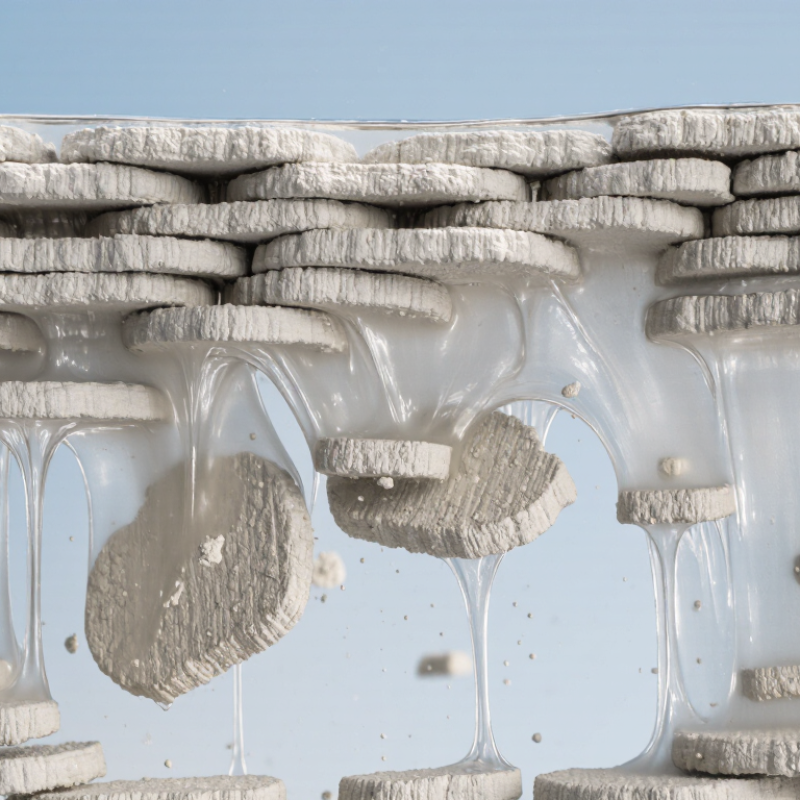
Additive bentonite is a processed clay material used to modify industrial mixtures. Its main mineral is montmorillonite, built from two silica sheets around one alumina sheet. This is the 2:1 layer structure. Water enters between these layers, causing the clay to swell and form a stable gel. The layers also carry a negative charge, which attracts exchangeable calcium, magnesium, sodium, and other ions.
Its cation exchange capacity, or CEC, commonly falls between 70 and 150 meq/100 g. This range is reported in technical clay-mineral literature and depends on purity, moisture, particle size, and testing method. Higher CEC usually indicates more active exchange sites. It does not automatically prove better performance. That point is often missed.
In drilling fluids, additive bentonite helps control filtration, suspend solids, and increase viscosity. API Specification 13A evaluates relevant drilling-fluid materials through properties such as yield and fluid-loss performance. The U.S. Geological Survey’s Mineral Commodity Summaries also identifies drilling mud, foundry sand, iron ore pelletizing, and civil engineering as major bentonite applications. In practical testing, a small dosage can turn water into a smooth, resistant gel. Results can vary sharply with salt content and mixing energy. A laboratory value may not predict field behavior perfectly. That deserves caution.
What Is Additive Bentonite and What Is It Used For?
Additive bentonite is a clay-based functional material dominated by montmorillonite.
Its particles contain 2:1 aluminosilicate layers and typically provide a cation exchange capacity (CEC) of about 70–150 meq/100 g.
The chart compares typical CEC ranges for common clay minerals. The relatively high CEC of montmorillonite helps additive bentonite absorb water, swell, retain ions, and improve suspension, sealing, binding, and rheology in applications such as drilling fluids, foundry molds, pelletizing, and other industrial formulations.
Grade Standards: API 13A Swell Index ≥24 mL/2 g and ≤15 mL Fluid Loss
What Is Additive Bentonite and What Is It Used For?
Additive bentonite is a processed clay used to improve drilling-fluid performance. It hydrates in water and forms a fine, flexible filter cake. This structure helps suspend drilled solids and reduce fluid invasion into permeable formations. In field work, the key question is not simply whether bentonite swells. Its test results must meet the required grade.
For drilling-fluid grade material, API Spec 13A sets a swell index of at least 24 mL per 2 g. It also limits fluid loss to 15 mL or less under the specified API test procedure. These figures are practical screening points, not decorative numbers. Higher swelling can support better solids suspension, while lower fluid loss usually indicates stronger filtration control. However, a passing laboratory result cannot guarantee identical performance underground. Water chemistry, mixing energy, temperature, and contamination can change the outcome. That part is easy to underestimate.
Tips: Check the certificate against API Spec 13A. Confirm the test method, sample mass, water quality, and test date. Run a small laboratory pilot before bulk use. Measure funnel viscosity and fluid loss after full hydration. A material may reach 24 mL/2 g yet still require treatment. Review results using the actual field water, not ideal laboratory water. Source: American Petroleum Institute, API Spec 13A, testing requirements for drilling-fluid materials.
Drilling Fluids: 6–8% Dosage for Viscosity and Filtration Control
Additive bentonite is a finely ground clay used to improve water-based drilling fluids. When properly hydrated, its particles form a structured suspension. This structure increases viscosity and helps carry drilled cuttings toward the surface. It also creates a thin, low-permeability filter cake along the borehole wall.
A common working range is 6–8% bentonite by fluid weight. At this dosage, the fluid can gain useful viscosity and better filtration control. The exact result depends on water quality, clay grade, mixing energy, and solids content. Clean water usually gives more predictable hydration.
Add the powder slowly under strong agitation. Lumps can form quickly. Allow sufficient hydration time before judging performance. A Marsh funnel can provide a quick viscosity check. A filter press can measure fluid loss and cake quality.
Small details matter. Poor dispersion may look like weak bentonite, even when the dosage is correct. High salinity can also reduce swelling and change the expected rheology. A neat 6–8% target can still fail in the field. It should be adjusted after testing, not accepted blindly. Check funnel viscosity, fluid loss, density, and gel strength together. Excessive viscosity may slow pumping and increase pressure. Insufficient viscosity may leave cuttings in the hole. The best treatment is often less perfect than the laboratory plan.
Foundry, Pellets, and Civil Works: 0.5–2% Binder Dosage Ranges
Additive bentonite is a processed clay material used to improve bonding, suspension, and water retention. Its performance comes mainly from swelling minerals, especially montmorillonite. However, not every bentonite behaves alike. Mineral content, particle size, moisture, and sodium-calcium balance can change results.
In foundry sand, a typical addition ranges from 0.5–2% of the sand system. Lower dosages may improve mold strength without making shakeout difficult. Higher dosages can increase green compression strength, but excessive clay may reduce permeability. Operators should check moisture, compactability, permeability, and casting surface quality together. A strong mold is not always a better mold.
For iron ore pellets, bentonite commonly acts as a binder around 0.5–1% of dry concentrate. The exact level depends on concentrate fineness, pelletizing equipment, and required drop strength. Too little binder can produce weak green pellets. Too much may increase gangue content and affect furnace performance. Small laboratory trials should precede plant changes.
Civil works may use roughly 1–2% bentonite in selected soil, slurry, or sealing mixtures. The calculation basis must be stated clearly: dry soil, dry solids, or total mix. This detail is often missed. Field teams should verify viscosity, filtration loss, swelling, and mixing uniformity. Water quality also matters. A dosage that works in a clean laboratory can perform poorly with saline water or variable soil. Pretreatment and curing time deserve attention. Errors happen when a single percentage replaces site testing.
Safety and Quality Control: ISO 13500, SDS Review, and Heavy-Metal Testing
What Is Additive Bentonite and What Is It Used For?
Additive bentonite is a processed clay used to adjust drilling-fluid performance. It helps suspend solids, reduce fluid loss, and form a low-permeability filter cake. Some grades also support wellbore sealing and improve carrying capacity. However, appearance is not proof of consistency. A pale, smooth powder can still vary in moisture, mineral composition, or treatment level.
Safety control should begin with ISO 13500:2018 testing. The standard provides recognized methods for drilling-fluid materials, including checks related to rheology, filtration, moisture, and residue. Results should come from a representative lot sample, not only a supplier certificate. The SDS must identify composition, dust hazards, exposure controls, first aid, and storage conditions. Review Section 3 carefully. Generic wording can hide meaningful variation.
Heavy-metal testing needs a qualified laboratory using acid digestion with ICP-MS or ICP-OES. Lead, arsenic, cadmium, mercury, and chromium deserve specific attention. Detection limits should be lower than the applicable customer or regulatory limits. Limits differ by application and country. One number cannot fit every use. Where crystalline silica is present, OSHA sets an 8-hour respirable silica limit of 50 micrograms per cubic meter. The USGS Mineral Commodity Summaries tracks bentonite production and sales, but market volume does not demonstrate safety. In practice, batch traceability, retained samples, and repeat testing matter. They are often overlooked. The testing plan may still need revision after the first abnormal result.