Top 10 Natural Flocculants for Efficient Water Treatment Solutions?
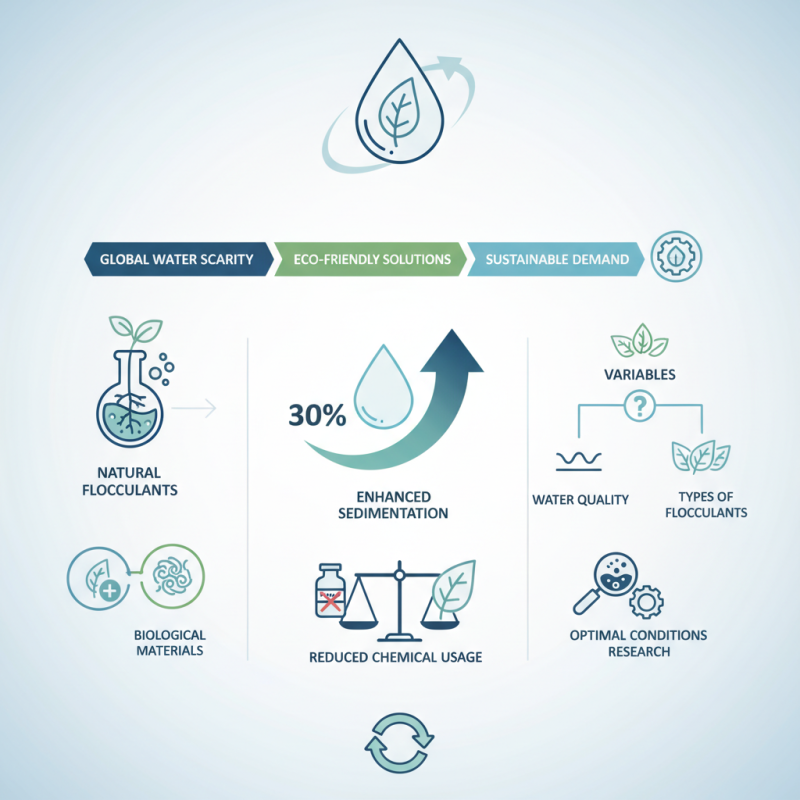
Water treatment is a crucial sector in addressing global water scarcity. Natural flocculants have gained attention for their eco-friendly properties. According to a report by the International Water Association, the demand for sustainable water treatment solutions is projected to grow by 14% annually. This shift underscores the importance of exploring alternatives to synthetic chemicals that often harm aquatic ecosystems.
Dr. Maria Thompson, a leading expert in sustainable water treatment, emphasizes, “Natural flocculants provide a safer, efficient method for clarifying water.” These natural agents, derived from plants and biological materials, can reduce chemical usage significantly. Studies show that they can enhance sedimentation rates by up to 30%. However, their effectiveness can vary based on water quality and the types of natural flocculants used. It is crucial to assess these variables when implementing them in real-world applications.
As we navigate this evolving field, there is much to learn. The variability in the performance of natural flocculants raises questions. Researchers are still exploring optimal conditions for their use. Addressing these issues is vital for innovators and practitioners alike, pushing the boundaries of current water treatment technologies.
Understanding Flocculation: The Role of Natural Flocculants
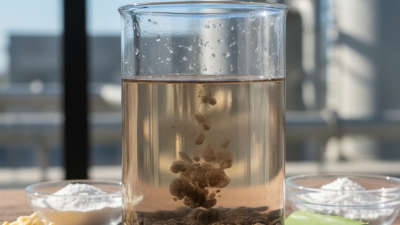
Flocculation is a vital process in water treatment. Natural flocculants play a significant role in improving this process. These substances help aggregate suspended particles into larger clumps. This increases the efficiency of water purification.
Many natural flocculants are derived from plants. They include substances like mucilage and starch. These materials can be effective alternatives to synthetic chemicals. Their use often leads to safer water treatment practices. Using natural flocculants may reduce chemical residues. Environmental impact is also lessened.
Tips: Test different types of natural flocculants to find the most effective one for your specific water source. Monitor water quality regularly to evaluate flocculation efficiency. Keep in mind that not all natural flocculants work the same under varying conditions, such as pH and temperature.
Choosing the right natural flocculant can be challenging. Some may not perform well with certain contaminants. Experimentation is necessary to determine effectiveness. Always consider local environmental conditions in your selection process. It's crucial to validate the results to ensure safe and clean water.
Types of Natural Flocculants Used in Water Treatment
Natural flocculants play a crucial role in water treatment by enhancing the removal of suspended particles. Commonly used materials include plant-based polysaccharides, like guar gum and starch. According to a 2022 report from the Water Environment Federation, these natural agents can reduce turbidity by up to 90%. Their effectiveness lies in their ability to bind fine particles, forming larger aggregates that settle easily.
In addition to polysaccharides, clay minerals are also effective natural flocculants. Montmorillonite clay, for instance, has shown promising results in various studies. Research from the Journal of Hazardous Materials indicates that clay can significantly lower the levels of heavy metals in treated water. Such findings suggest that the choice of flocculant can greatly impact the efficiency of water treatment processes.
However, not all natural flocculants yield the same results across different types of water. Variability in source materials can affect their performance. It’s essential to conduct site-specific tests to determine the best flocculant for a given application. The exploration of these materials is ongoing, as the industry seeks to balance efficiency with sustainability.
Top 10 Natural Flocculants and Their Sources
Natural flocculants are becoming popular in water treatment. They offer effective solutions by aiding in the removal of suspended particles. Some common natural flocculants include:
1. **Moringa Oleifera Seeds**: This plant's seeds contain proteins that bind to impurities. They work well in both freshwater and wastewater treatment.
2. **Tamarind Seed Powder**: This powder acts as a thickener and can effectively remove pollutants. It is readily available and eco-friendly.
3. **Chitosan**: Derived from crustacean shells, chitosan is biodegradable and has antimicrobial properties. Its ability to attract negatively charged particles makes it highly efficient.
4. **Bentonite Clay**: This clay enhances stability in water systems. It's especially useful in removing fine particles and turbidity.
5. **Almond Shells**: These provide a natural alternative. Ground almond shells can act as a flocculant while also being a sustainable option.
6. **Cactus Mucilage**: The gel-like substance from cacti serves as a binder. Its application in water treatment is gaining traction globally.
Tips: Always consider the source of your flocculants. Natural doesn't always mean effective for every situation. Testing different types is important. Pay attention to regional availability, as some sources may be hard to find.
Some flocculants can be inconsistent. Environmental conditions impact their performance. Monitoring water quality is essential when using natural alternatives. Continuous improvement and adjustments may be necessary.
Top 10 Natural Flocculants for Efficient Water Treatment Solutions
| Flocculant |
Source |
Benefits |
Applications |
| Moringa Oleifera |
Seeds |
Antimicrobial, effective against turbidity |
Drinking water purification |
| Chitosan |
Crustacean shells |
Biodegradable, non-toxic |
Wastewater treatment |
| Gelatin |
Animal collagen |
Good for small particles |
Clarification of water |
| Alginates |
Brown seaweeds |
Thickening agent, non-toxic |
Food and beverage industries |
| Psyllium |
Psyllium husks |
Excellent water retention |
Water filtration processes |
| Tamarind Seed Powder |
Tamarind seeds |
Natural coagulant |
Industrial wastewater treatment |
| Bamboo Charcoal |
Bamboo |
Absorbs impurities |
Air and water purification |
| Mucilage from Cactus |
Cacti |
Eco-friendly, promotes sedimentation |
Environmental cleanup efforts |
| Okra Extract |
Okra pods |
Natural coagulant property |
Water treatment facilities |
Mechanisms of Action: How Natural Flocculants Improve Water Clarity
Natural flocculants have gained attention for their role in water treatment processes. These substances improve water clarity by facilitating the aggregation of suspended particles. The mechanisms behind this action are diverse. They often involve charge neutralization and bridging phenomena. The result is a clearer body of water.
Tips: When considering natural flocculants, evaluate their source. Some might be more efficient in specific waters. Testing different types can yield better clarity.
The use of natural flocculants can vary in effectiveness. Factors like pH, turbidity, and the presence of organic matter play significant roles. Sometimes, the desired flocculation isn’t achieved. A reconsideration of water properties can be necessary.
Tips: Regular monitoring can help. Adjustments based on water quality can enhance results. Experience is essential in optimizing flocculant use. Experimentation is part of the learning curve.
Advantages of Using Natural Flocculants Over Synthetic Alternatives
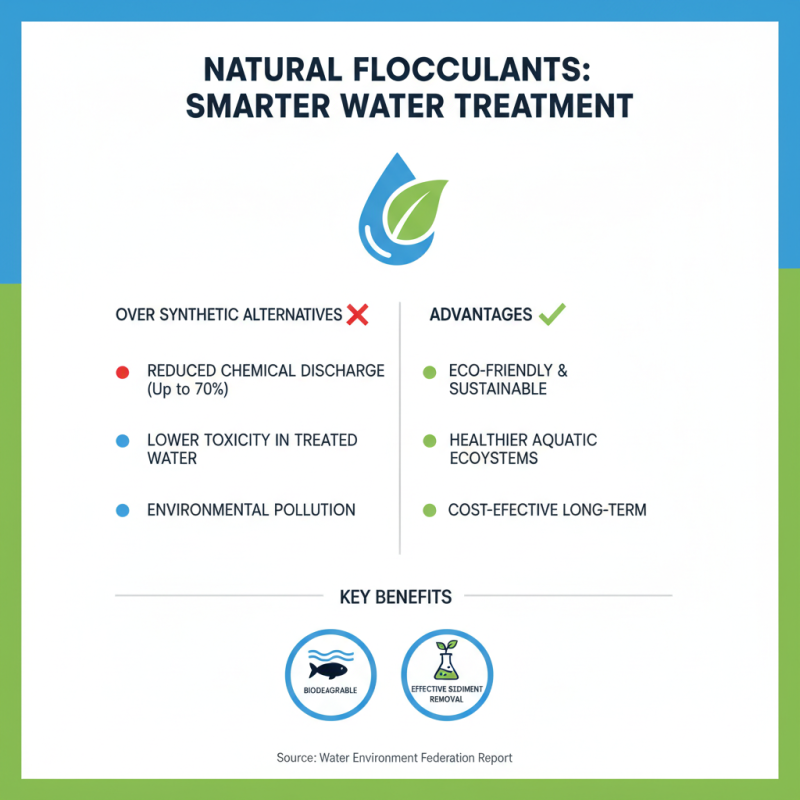
Natural flocculants have gained attention as viable alternatives to synthetic agents in water treatment. This shift is backed by numerous studies showing their effectiveness and environmental benefits. A report by the Water Environment Federation highlights that natural flocculants can reduce chemical discharge into water bodies by up to 70%. This reduction contributes to lower toxicity levels in treated water, promoting healthier ecosystems.
Natural flocculants, derived from plants and organic materials, often require lower doses than synthetic options. Research indicates that using natural agents can lead to a significant cost savings of about 30% in operational expenses. They also tend to have fewer side effects, presenting a safer option for both human health and aquatic life. However, they can be less consistent due to variations in raw material quality, which is a point of concern in large-scale applications.
Despite their advantages, the performance of natural flocculants can fluctuate based on environmental conditions. Several studies suggest that factors such as pH, temperature, and the presence of other substances can affect efficiency. This variability requires further exploration to standardize their use across different scenarios. Nonetheless, ongoing research suggests that with proper monitoring and adjustment, natural flocculants can play a key role in sustainable water treatment practices.