What is Oilfield Additives and How Do They Impact Drilling?
Oilfield additives play a crucial role in the drilling industry. Their main function is to enhance the performance of drilling fluids. These additives help optimize fluid properties, ensuring better efficiency. They can affect viscosity, density, and fluid loss characteristics. By improving these factors, oilfield additives contribute to smoother operations.
However, the use of oilfield additives is not without its challenges. Some additives may cause unexpected reactions with rock formations. This can lead to complications during drilling. It's essential for engineers to understand their effects deeply. Adopting an educated approach minimizes risks and enhances drilling success.
The impact of oilfield additives extends beyond immediate drilling processes. Their influence can be felt in overall production rates and costs. Effectively managing these substances is vital for maximizing resource recovery. Balancing performance and potential downsides fosters a more reliable drilling environment. Thus, a thoughtful consideration of oilfield additives is necessary for the industry's progress.

What are Oilfield Additives and Their Functions in Drilling Operations?
Oilfield additives play a crucial role in drilling operations. These substances are mixed with drilling fluids to enhance performance. Their primary functions include reducing friction and stabilizing the borehole. Some additives prevent the collapse of geology during drilling. Others improve the flow of fluids through the drill bit. These enhancements lead to more efficient drilling.
Each additive serves a specific purpose. Some help in lubricating the drill, allowing it to move smoothly. Others assist in controlling the temperature and pressure of fluids. However, the selection of additives requires careful consideration. Not all additives work in every geological setting. The wrong choice can lead to increased costs and delays.
Understanding the impact of additives is essential. They can significantly influence drilling efficiency and safety. By monitoring their effects, operators can adapt strategies. This flexibility helps improve overall performance. Drilling operations rely heavily on these chemical tools. Yet, their impact is not always predictable. Operators need to be prepared for unexpected challenges.
Impact of Oilfield Additives on Drilling Efficiency
This chart represents the impact index of various oilfield additives on drilling efficiency. Each additive plays a critical role in enhancing operational performance and mitigating challenges during drilling operations.
Classification of Oilfield Additives: Types and Their Applications
Oilfield additives play a crucial role in the drilling process. These substances enhance performance and improve efficiency in various ways. They are categorized into several types, each serving distinct functions.
One main classification is fluid loss additives. These additives help reduce the loss of drilling fluids into porous formations. They maintain the stability of the wellbore and prevent issues such as cave-ins.
Another key category includes lubricants, which minimize friction between the drill bit and the rock. This leads to faster drilling rates and extends equipment life.
Tips: For effective application, consider the specific formation and fluid type. Test different additives in small batches to gauge performance. Regularly assess and adjust your additive mixture based on drilling conditions.
Additionally, there are surfactants used to alter the behavior of fluids. They can improve wetting properties, making it easier for the drilling fluid to interact with the rock. However, overuse can lead to unexpected reactions. Always reflect on prior experiences when choosing additives for new projects.
Impact of Oilfield Additives on Drilling Efficiency and Cost Reduction
Oilfield additives play a critical role in enhancing drilling efficiency and reducing operational costs. These substances are designed to improve fluid properties, ensuring optimal performance during drilling operations. For instance, studies indicate that the use of specific additives can reduce friction by up to 30%. This leads to less energy consumption and faster drilling rates, ultimately enhancing overall productivity.
Moreover, choosing the right additives can significantly impact the total cost of drilling. Research shows that incorporating specialty additives can lower the cost per foot drilled by approximately 15-20%. This is particularly important in a fluctuating market, where cost management is essential. However, the challenge lies in selecting the appropriate additives that meet the specific geological conditions of each site. Some operators still rely on traditional methods, risking inefficiencies.
Additionally, the environmental impact of some additives remains a concern. While many are designed to be biodegradable, not all additives comply with environmental regulations. Continuous evaluation is necessary to ensure that the benefits outweigh potential drawbacks. Operators must rethink their choices regularly, prioritizing both performance and sustainability in drilling operations. This reflective approach helps strike a balance between efficiency and responsibility.
Industry Standards and Regulations Governing Oilfield Additives Usage
Industry standards play a crucial role in the usage of oilfield additives. These substances are essential for maximizing efficiency during drilling operations. Various organizations create guidelines to ensure safety and effectiveness. Compliance with these standards can significantly reduce environmental risks and improve operational success. It is vital for drilling companies to stay informed about these regulations.
Regular audits of additive usage can help maintain compliance. Tracking performance trends is crucial. This ensures that companies aren’t just following rules but are also achieving the intended benefits. If not monitored, there can be unintended consequences, such as reduced efficiency or environmental harm.
Tips: Always review the latest regulatory updates related to oilfield additives. Training staff on compliance can minimize errors. Documenting all procedures enhances accountability and transparency. These practices build a culture of safety and responsibility within the organization. Consider periodic training sessions to keep knowledge current and relevant.
Recent Advancements in Oilfield Additives: Trends and Future Prospects
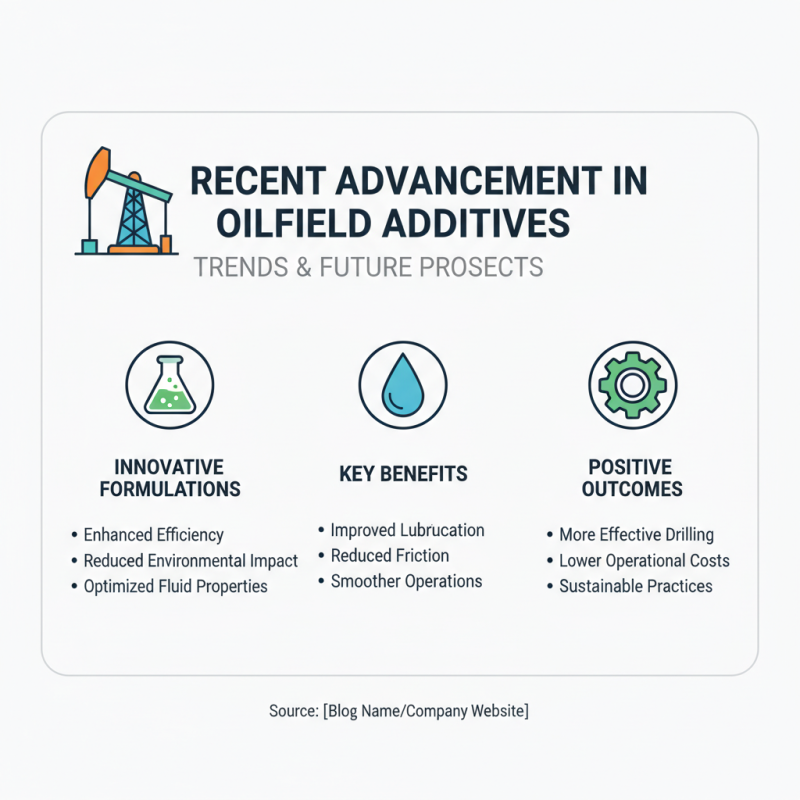
Recent advancements in oilfield additives have revolutionized drilling practices. Innovative chemical formulations are designed to enhance efficiency and reduce environmental impact. These additives optimize fluid properties, improving lubrication and reducing friction. Consequently, drilling operations become smoother and more effective, leading to lower operational costs.
In recent years, the trend toward eco-friendly additives has gained momentum. Many companies are researching biodegradable options. These products minimize ecological footprints while maintaining performance standards. However, the challenge lies in balancing performance with sustainability. Some newer additives may not yet be thoroughly tested in extreme conditions.
The industry faces ongoing scrutiny regarding safety and reliability. New additive technologies could potentially introduce unforeseen complications. Moreover, operators must remain vigilant about real-world applications. Although promising, not all advancements yield immediate benefits. The future of oilfield additives requires careful consideration and ongoing innovation.