Choosing a China-based supplier requires more than comparing prices. Natural Flocculant products can differ in purity, active content, moisture, particle size, and performance. These details influence settling speed, sludge volume, and treated-water clarity.
Professor Menachem Elimelech, a leading water-treatment researcher, has emphasized that “the water-treatment technologies of the future will need to be more energy efficient and sustainable.” This principle explains the growing interest in chitosan, modified starch, tannin, and other plant-based flocculants. However, “natural” does not automatically mean effective.
A reliable supplier should provide clear technical data, batch records, safety documentation, and practical testing support. Ask for jar-test results using your actual water. Measure turbidity before and after treatment. Check pH sensitivity, dosage range, mixing time, and sediment strength. Small differences matter.
Factory experience helps.
An experienced Chinese manufacturer may support private labeling, export packaging, and stable production. Yet buyers should verify these claims through samples, audits, certificates, and independent laboratory testing. A beautiful product brochure is not enough.
Natural Flocculant selection also depends on the application. Municipal water, mining wastewater, food processing, and industrial effluent may require different formulations. One product rarely fits every process. This is where some purchasing plans become too optimistic.
The better approach is practical and transparent: define performance targets, test several batches, and compare total treatment cost. Supplier communication matters as much as product quality. A dependable partner should explain limitations, not hide them, and help buyers make a technically informed decision.
A natural flocculant is a plant, animal, or mineral-based material that gathers tiny particles in water. Common examples include starch, tannins, chitosan, and seed proteins. These materials reduce particle repulsion and create larger clusters called flocs. The flocs then settle or rise more easily during clarification.
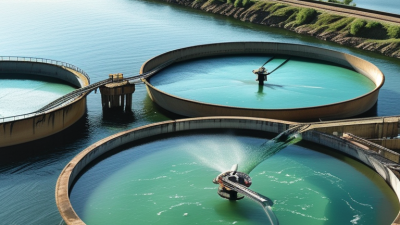
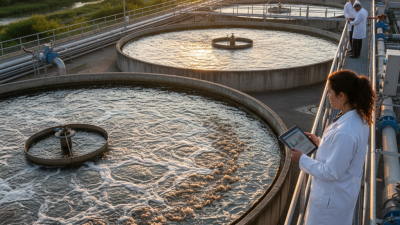
The mechanism is simple, but not automatic. A flocculant first attaches to suspended solids through charge neutralization or polymer bridging. Gentle mixing helps particles collide without breaking the forming flocs. In a treatment tank, clear water may appear above soft, brownish sediment within minutes.
According to the WHO and UNICEF Joint Monitoring Programme’s 2023 report, 2.2 billion people lacked safely managed drinking water in 2022. The pressure for practical treatment solutions remains real.
The UN World Water Development Report 2024 states that agriculture uses about 70% of global freshwater withdrawals. This makes efficient water clarification important for farms and industrial users. In field practice, a jar test should guide dosage, mixing time, and settling time.
Too little product leaves cloudy water. Too much may restabilize particles or increase organic loading. Natural does not always mean harmless. Raw materials can vary by season, source, and processing quality.
A reliable supplier should provide test data, batch traceability, and application guidance. Some results still need questioning. Purification performance depends heavily on pH, turbidity, temperature, and the water’s chemistry.
China Top Natural Flocculant Supplier for Global Buyers?
Natural flocculants can clarify wastewater with plant proteins, starches, cellulose, or chitosan. They may reduce reliance on synthetic polymers and produce sludge with fewer persistent chemical residues. Less residual contamination matters. However, “natural” does not automatically mean safe or effective. Water chemistry still controls performance.
The WHO/UNICEF Joint Monitoring Programme estimated that 2.2 billion people lacked safely managed drinking water in 2022. The UNESCO World Water Development Report 2024 also states that agriculture accounts for about 70% of global freshwater withdrawals. These figures increase interest in affordable treatment and water reuse. Peer-reviewed jar-test studies commonly report 70–95% turbidity reduction with suitable natural materials. Results vary sharply with pH, temperature, dosage, and raw-water quality.
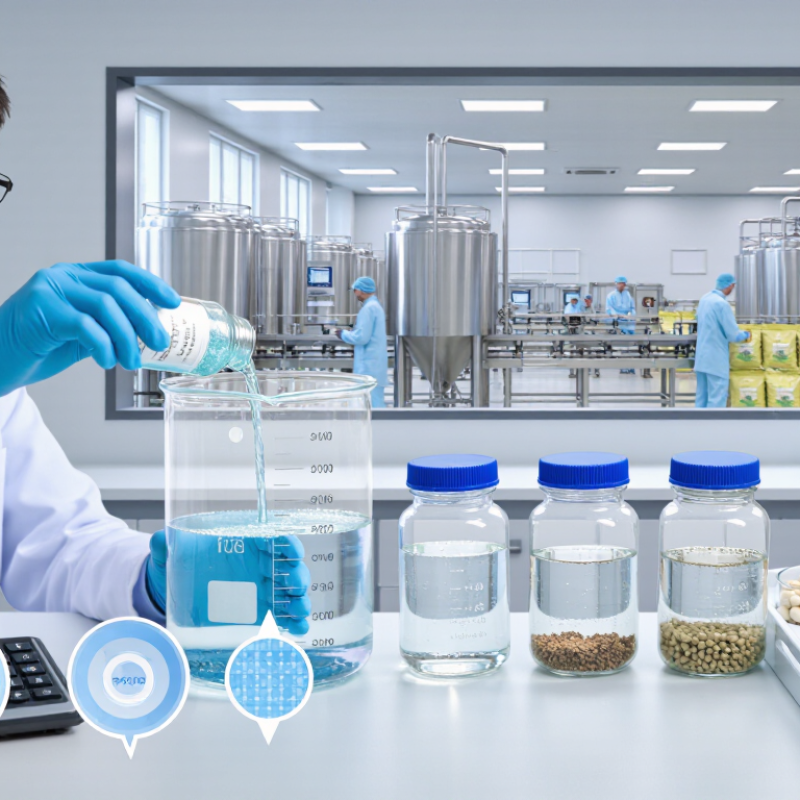
In practical trials, operators should test several dosages beside a conventional control. A 500-millilitre beaker can reveal settling speed, floc strength, and final clarity within minutes. One trial is not enough. Natural feedstocks change with harvest conditions, protein content, and storage. A reliable China-based supplier should provide batch traceability, moisture data, active-content testing, and contaminant screening. Buyers should also request biodegradability evidence and sludge-disposal guidance. Some materials perform well in turbidity removal but struggle with color, algae, or dissolved organic matter. That limitation deserves honest discussion.
China Top Natural Flocculant Supplier for Global Buyers?
A reliable natural flocculant supplier should prove performance, not only offer low prices. Natural polymers can vary with crop source, harvest season, moisture, and processing. Request a technical data sheet, certificate of analysis, and recent batch records. Check active content, viscosity, pH, ash, moisture, and microbial controls. Ask for jar-test results using your actual wastewater. Laboratory water is not enough.
Tips: Compare three production batches. Inspect the factory if possible. Confirm raw-material traceability. Request samples before signing a large contract. WHO and UNICEF’s Joint Monitoring Programme reported that 2.2 billion people lacked safely managed drinking water in 2022. This pressure increases demand for practical treatment solutions, but “natural” does not automatically mean effective or safe. A supplier should explain dosage, mixing speed, settling time, and disposal conditions clearly.
Evaluate production capacity and quality consistency, not just a sample’s appearance. Review ISO-based quality procedures, export experience, packaging protection, and response times. Independent testing can verify performance and contaminant limits. I would also test the product during temperature changes, because field conditions are rarely stable. No supplier is perfect. A careful buyer should document risks, repeat trials, and keep alternative sources available.
China’s natural flocculant sector combines large-scale processing with practical export experience. Factories commonly handle plant-based polymers, modified starches, and other biodegradable formulations. Production begins with screened raw materials, controlled hydration, and measured reaction times. Operators record batch temperature, viscosity, moisture, and active content during processing. Small changes matter. A warmer mixing tank can alter dissolution speed and final performance. This shop-floor discipline helps buyers compare batches rather than rely on attractive specifications.
Quality control should continue beyond the production line. Reliable facilities retain samples, use calibrated instruments, and issue test reports linked to batch numbers. Typical checks include appearance, pH, solubility, viscosity, moisture, and flocculation performance in representative water. Application testing is especially important because mining, municipal, and industrial water behave differently. Buyers should request pilot samples and clear dosage ranges before approving larger orders. Some suppliers provide neat paperwork but limited field evidence. That gap deserves attention.
Export capability depends on more than a port location. Experienced teams prepare multilingual labels, safety documents, packing lists, certificates, and customs data accurately. Moisture-resistant bags, inner liners, and pallet protection reduce damage during long ocean shipments. Container loading should consider humidity, stacking pressure, and regional storage conditions. Delivery records, responsive communication, and traceable corrective actions reveal operational reliability. No system is perfect. A supplier willing to explain a failed batch often inspires more confidence than one promising flawless results.
Natural flocculants such as chitosan, starch-based polymers, and tannin-based products are commonly evaluated through active content, moisture, pH, solubility, and batch consistency. The chart shows representative specification ranges commonly used in commercial technical data sheets; exact requirements vary by formulation and application.
China’s natural flocculant suppliers can support global water-treatment projects, but selection should begin with evidence, not catalog claims. The WHO and UNICEF Joint Monitoring Programme reported that 2.2 billion people lacked safely managed drinking water in 2022. This pressure makes treatment performance, safety, and supply continuity equally important.
Request the plant source, extraction method, active-content range, moisture level, and microbiological limits. Ask for recent certificates of analysis from several production batches. One sample is not enough. Experienced buyers should run jar tests using their own water, measuring settling time, turbidity removal, sludge volume, and final pH. The same powder may behave differently in river water, industrial wastewater, or high-salinity conditions. Supplier laboratories should explain test conditions clearly, rather than presenting one attractive result.
Check traceability from raw material to export shipment. ISO 9001 certification can indicate controlled procedures, but it does not prove treatment performance. Confirm packaging strength, storage life, container loading, customs documents, and technical response times. The supplier should also discuss contaminant screening and destination-market requirements, following the risk-management approach described in the WHO Guidelines for Drinking-water Quality. Price comparisons often ignore dosage and sludge-disposal costs. That is a mistake. A cheaper product may require more frequent dosing or create heavier sludge. Buyers should compare cost per treated cubic metre, not cost per kilogram. Still, no evaluation is perfect; pilot results can change with seasonal water conditions.
| Evaluation Dimension | What Global Buyers Should Check | Relevant Natural Flocculant Options | Practical Benchmark or Evidence | Recommended Verification Method |
|---|---|---|---|---|
| Raw Material Origin | Confirm the botanical, marine, or animal-derived source and whether the origin is consistent between batches. | Chitosan, starch-based polymers, tannin-based products, alginate, and plant-seed proteins. | Source should be clearly identified, traceable, and suitable for the intended application. | Request a raw-material specification, traceability record, and batch-specific certificate of analysis. |
| Active Polymer or Functional Content | Compare the actual active content rather than relying only on product name or powder appearance. | Chitosan is commonly assessed by degree of deacetylation; starch and tannin products require application-specific active-content testing. | Test limits should be stated in the technical data sheet and linked to a defined analytical method. | Review the technical data sheet and independently test representative samples when purchasing at scale. |
| Water Treatment Performance | Evaluate turbidity removal, suspended-solids reduction, settling behavior, and sludge characteristics. | Different natural flocculants perform differently according to particle type, water chemistry, and dosage. | No universal dosage or removal rate applies; jar testing is required for reliable comparison. | Conduct standardized jar tests using the buyer’s actual raw water and compare results with the current treatment process. |
| pH Compatibility | Check performance across the operating pH range and determine whether pH adjustment is needed. | Chitosan is generally more soluble in mildly acidic conditions, while other plant-based materials may show different pH responses. | The effective pH range must be established for the specific product and water matrix. | Test performance at several pH values around the planned operating condition. |
| Compatibility with Existing Chemicals | Assess interactions with coagulants, mineral salts, polymers, disinfectants, and pH-control chemicals. | Natural flocculants can be used alone or in combination with conventional treatment chemicals, depending on the process. | Compatibility should be demonstrated through a controlled dosage sequence and not assumed from product literature. | Run side-by-side trials covering single-product and combination-treatment conditions. |
| Biodegradability and Environmental Profile | Review biodegradability, aquatic impact, residual organic load, and the environmental profile of the resulting sludge. | Many natural polymers are biodegradable, but biodegradability and ecological impact depend on composition and dosage. | Environmental claims should be supported by recognized test reports rather than general marketing language. | Request biodegradability, ecotoxicity, and relevant safety documentation where required by the destination market. |
| Safety and Contaminant Control | Check heavy metals, microbiological limits, residual solvents, allergens, and other application-specific contaminants. | Requirements vary for municipal water, industrial wastewater, food processing, aquaculture, and mining applications. | Acceptance limits should match local regulations and the final use of treated water or sludge. | Review recent batch test reports from an appropriately qualified laboratory. |
| Product Consistency | Compare viscosity, moisture, particle size, color, solubility, and active performance between lots. | Natural raw materials can vary seasonally and geographically, making quality control especially important. | Specification limits should be numeric where possible and supported by batch records. | Request samples from multiple production batches and compare laboratory results before approval. |
| Documentation Quality | Confirm that technical, safety, regulatory, and shipping documents are complete and current. | Typical documents include a technical data sheet, safety data sheet, certificate of analysis, packing specification, and origin statement. | Documents should use consistent product descriptions, batch numbers, test methods, and revision dates. | Perform a document review before issuing a purchase order and define required documents contractually. |
| Production and Quality-Control Capacity | Assess whether the supplier can maintain stable quality during scale-up and repeated export orders. | Relevant controls include incoming-material inspection, process monitoring, finished-product testing, and retained samples. | A capable supplier should explain its quality-control workflow and provide a realistic production lead time. | Use a supplier questionnaire, virtual or on-site audit, and a controlled first production order. |
| Packaging and Shelf Life | Check moisture protection, packaging strength, storage conditions, and shelf-life validation. | Powdered natural flocculants generally require protection from moisture, heat, and contamination. | Packaging should be suitable for the transport route and destination climate, with a clearly stated shelf life. | Review packaging specifications, storage instructions, expiry labeling, and transport test results where available. |
| Export and Logistics Capability | Evaluate export experience, customs documentation, palletization, container loading, and communication during shipment. | Bulk powder shipments require careful control of moisture exposure, weight accuracy, and packaging integrity. | Lead time, minimum order quantity, incoterms, and port arrangements should be stated in writing. | Request a sample commercial quotation and verify that shipping documents match the product documentation. |
| Application Support | Determine whether the supplier can support dosage optimization, process troubleshooting, and scale-up. | Natural flocculants are highly dependent on water chemistry, mixing energy, temperature, and settling conditions. | Useful support includes jar-test guidance, dosage recommendations, and a written trial report. | Run a pilot trial with defined success criteria, sampling points, and performance indicators. |
| Total Cost of Ownership | Compare delivered treatment cost rather than purchase price alone. | Consider product dosage, freight, preparation equipment, pH adjustment, sludge handling, and disposal costs. | A lower unit price may not produce the lowest cost per cubic meter of treated water. | Calculate cost per treated volume using verified dosage and actual process-performance data. |
| Long-Term Supply Reliability | Check raw-material continuity, backup sources, production planning, and responsiveness to quality issues. | Natural materials may be affected by agricultural conditions, seasonal supply, and changes in processing conditions. | Supply agreements should define specifications, change-notification procedures, and corrective-action timelines. | Use approved-supplier status, periodic requalification, and a documented contingency plan. |
Paul Zhou:8613356391894
Eric Wong:8615963245439
Emily Wu:8617866856171