2026 How to Use Anionic Flocculant for Effective Water Treatment?
The use of Flocculant Anionic in water treatment is crucial for achieving cleaner water and enhancing environmental sustainability. According to a recent report by the Water Research Institute, an estimated 70% of processing plants utilize anionic flocculants to remove suspended solids effectively. These additives help in reducing the turbidity of water, making the treatment process more efficient.
Dr. Emily Thompson, an expert in water treatment technologies, emphasizes that "the efficiency of Flocculant Anionic can significantly impact the overall water quality." However, despite its benefits, some challenges remain. Improper usage or overdosage of flocculants can lead to negative environmental effects. Plant operators must be educated on the right application methods and optimal dosages to avoid unintended consequences.
Furthermore, not all anionic flocculants are created equal. The selection of the right type depends on specific water conditions. There is no one-size-fits-all solution, and this can leave room for error. Continuous research and monitoring are essential to enhance the efficacy of Flocculant Anionic and ensure that water treatment processes remain effective and safe for the environment.
Types of Anionic Flocculants Used in Water Treatment Processes
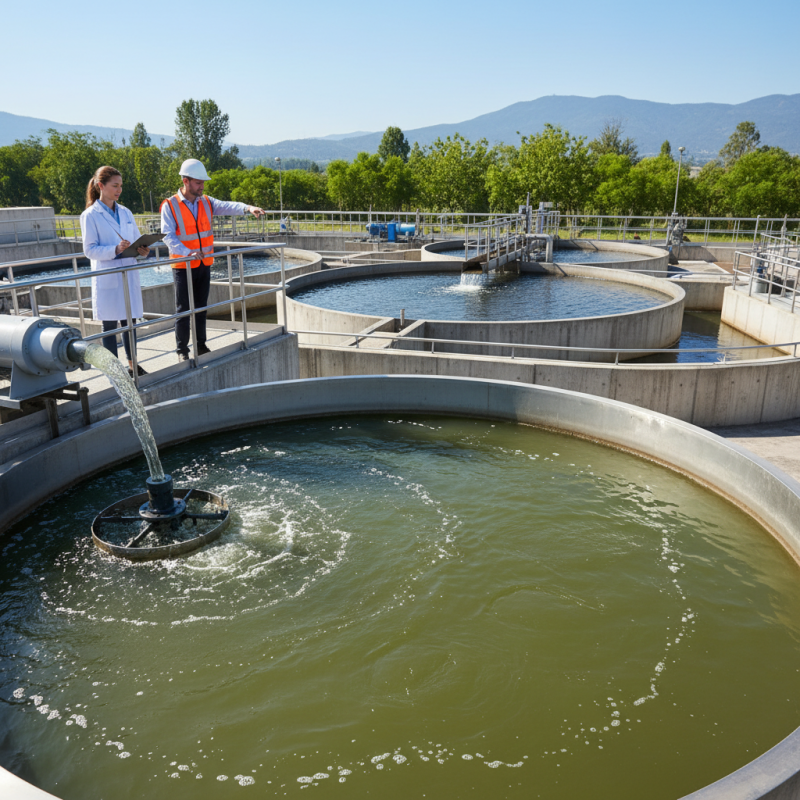
Anionic flocculants play a crucial role in water treatment. They are negatively charged polymers that help in aggregating suspended particles. This aggregation allows for more efficient removal of impurities. Different types of anionic flocculants are available for diverse water treatment processes.
Polyacrylate is a common anionic flocculant. It works well in turbid water and is effective in municipal wastewater treatment. Carboxymethyl cellulose is another type, suitable for both industrial and domestic applications. It helps in enhancing sedimentation rates and improving overall water clarity.
**Tips:** Always consider the specific needs of your water source. Conduct tests to determine the right flocculant type. Adjust dosages carefully; overuse can lead to inefficiency.
Another option is modified starches, often used in industries with high organic loads. They are less harmful and biodegradable. Depending on your needs, the choice can impact your treatment process significantly.
**Tips:** Monitor your water quality regularly. Changes might require adjustments in flocculant types or amounts. Don't hesitate to seek expert advice if outcomes are not satisfactory. Understanding your water chemistry is key to successful treatment.
Benefits of Anionic Flocculants for Water Clarification
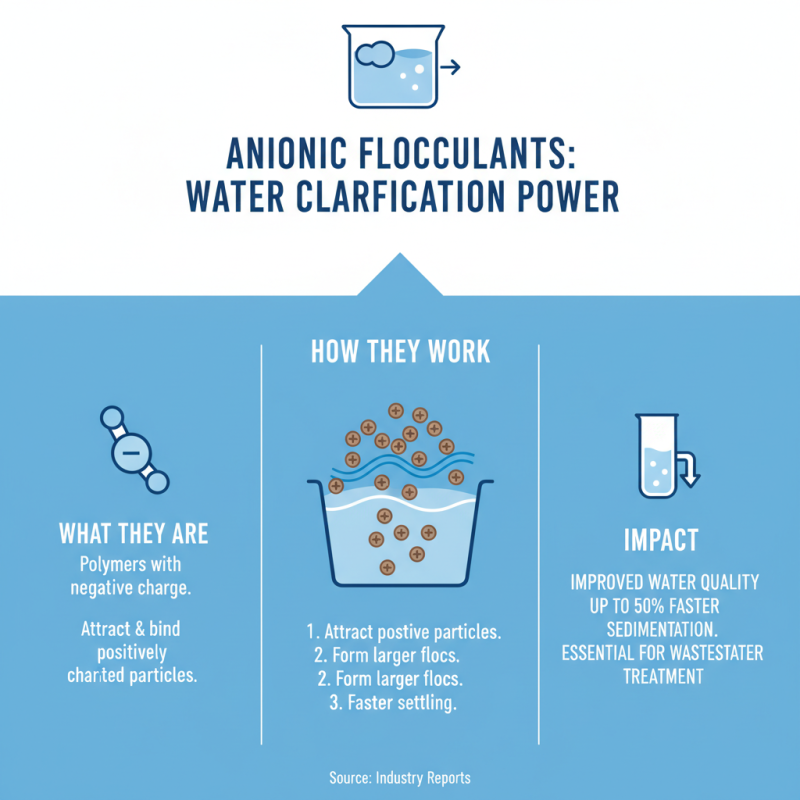
Anionic flocculants play a crucial role in water treatment, particularly in clarifying wastewater. These polymers have a strong negative charge, which allows them to attract and bind positively charged particles. This interaction helps form larger flocs that settle faster, improving water quality significantly. According to industry reports, using anionic flocculants can enhance sedimentation rates by up to 50%, making them essential in various applications.
Tips: Always monitor pH levels. The efficiency of anionic flocculants can vary with pH changes. A slight adjustment can make a big difference.
Another key benefit is the reduction in chemical dosing. Users often report a decrease in the need for additional coagulants. This not only lowers costs but also minimizes environmental impact. However, the effectiveness of anionic flocculants may decline in high salinity waters. Continuous testing is essential to optimize treatment.
Tips: Conduct regular jar tests to determine the best dosage. This helps in achieving optimal floc formation and settling.
In summary, while anionic flocculants are highly beneficial, their performance can be influenced by environmental factors. Understanding these variables is vital for effective water treatment.
Step-by-Step Application of Anionic Flocculants in Treatment Systems
Anionic flocculants play an essential role in water treatment systems. They help aggregate suspended particles, making solids easier to remove. The application process can be straightforward but does require careful consideration.
First, preparing the solution is crucial. Mix the anionic flocculant with water to create a well-dispersed solution. The concentration depends on the specific application. Be cautious; too much flocculant can lead to over-treatment, causing issues. Adjusting the dosage is often a trial-and-error process. Monitoring the results is necessary to find the right balance.
Next, introduce the solution into the treatment system. Do so evenly to ensure maximum contact with the particulates. This step is where some may overlook details, leading to uneven flocculation. After the addition, allow enough time for the flocculant to work. Proper agitation can help but be aware that over-mixing can break down flocs. Regular feedback and adjustments are essential for effective results.
2026 How to Use Anionic Flocculant for Effective Water Treatment? - Step-by-Step Application of Anionic Flocculants in Treatment Systems
| Step |
Description |
Dosage (g/m³) |
Contact Time (min) |
Expected Result |
| 1 |
Prepare the Anionic Flocculant Solution |
5-10 |
30 |
Effective mixing achieved |
| 2 |
Add Flocculant to the Water Treatment System |
10-15 |
2 |
Initial coagulation stage begins |
| 3 |
Stir the Mixture for Optimal Floc Formation |
15-20 |
5 |
Floccules start to form effectively |
| 4 |
Allow Settling Time |
N/A |
15-30 |
Clear water phase on top |
| 5 |
Conduct Water Quality Tests |
N/A |
N/A |
Assessment of flocculation efficiency |
Monitoring and Optimization of Anionic Flocculant Dosage
Monitoring and optimizing anionic flocculant dosage is crucial in water treatment processes. Proper dosage can improve the removal of suspended solids. Too little flocculant may lead to incomplete floc formation. This results in cloudy water and suboptimal treatment. Conversely, an excess can lead to operational issues and waste.
Regularly testing water quality is essential. Use turbidity measurements to guide your adjustments. Keep an eye on pH levels, as they affect flocculant performance. Different sources of water may require different dosages. Each source has unique properties that impact how flocculants react.
Record keeping is crucial. Document dosage levels and their effects on water clarity. This data can help in identifying trends over time. Sometimes, what works for one batch may not work for another. Experimenting with varying dosages can lead to better results. Adjustments should be made cautiously, as the process can be unpredictable. Frequent monitoring allows for timely corrections.
Monitoring Anionic Flocculant Dosage for Effective Water Treatment
This chart illustrates the relationship between the dosage of anionic flocculant (in mg/L) and the resulting water clarity (measured in NTU - Nephelometric Turbidity Units) over a series of tests conducted. The results showcase how increasing the dosage of anionic flocculant improves water treatment efficiency.
Safety and Environmental Considerations in Flocculant Use
When utilizing anionic flocculants in water treatment, safety and environmental impacts are crucial concerns. Anionic flocculants, often derived from natural and synthetic sources, can effectively bind particles for removal. However, improper use can lead to environmental harm, such as aquatic toxicity. A study highlighted that certain flocculants show low toxicity at recommended doses but pose risks at higher concentrations. Understanding the right dosage is essential for safety.
Tip: Always conduct a risk assessment before applying any flocculant. Research the effects of your chosen product on local ecosystems.
Disposing of used flocculants presents another challenge. Residual chemicals may enter water systems if not managed properly. Inadequate disposal can lead to bioaccumulation in aquatic life, disrupting local food webs. It's vital to follow recommended disposal protocols to mitigate these risks and comply with environmental regulations.
Tip: Regularly train staff on disposal best practices to ensure compliance.
Close monitoring and continuous research are necessary. Balancing efficiency in water treatment and protecting the environment is a complex task. More data is needed to refine the application of these chemicals in various settings while minimizing negative impacts. Striving for improvement in these areas should be a priority for the industry.