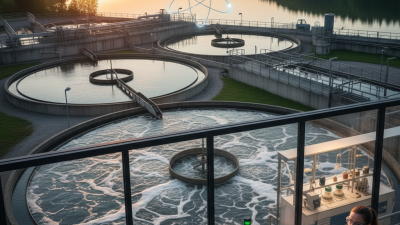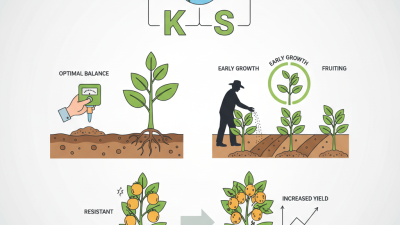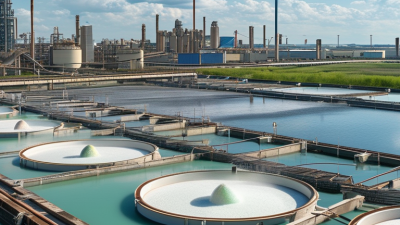
Phosphorus Removal is a central task in modern wastewater treatment and watershed protection. Excess phosphorus can trigger algal blooms, oxygen depletion, and unpleasant odors in lakes and rivers. In clear water, the damage may begin invisibly. A small nutrient increase can gradually change an entire aquatic ecosystem.
This guide examines the Top 10 Types of Phosphorus Removal Methods used in practical treatment settings. These methods include chemical precipitation, enhanced biological phosphorus removal, adsorption, crystallization, ion exchange, membrane filtration, electrochemical treatment, constructed wetlands, source control, and sludge management. Each approach has different requirements for energy, chemicals, land, equipment, and skilled operation. No single process works everywhere. That matters.
Operators must match the method with wastewater strength, flow variation, temperature, and discharge targets. A municipal plant may use ferric salts to capture phosphorus within minutes, producing heavier sludge for later handling. Another facility may depend on bacteria that store phosphorus inside their cells. Their performance can decline when carbon levels, oxygen conditions, or return flows change.
Laboratory results also need careful interpretation. Pilot testing often reveals problems that jar tests miss, including clogging, unstable settling, or rising chemical costs. Field experience shows that maintenance quality can influence results as much as the treatment design. The boundaries between methods are not always neat, and some claims deserve closer review. This overview presents their working principles, practical strengths, limitations, and environmental trade-offs, helping readers compare reliable options before selecting a treatment strategy.
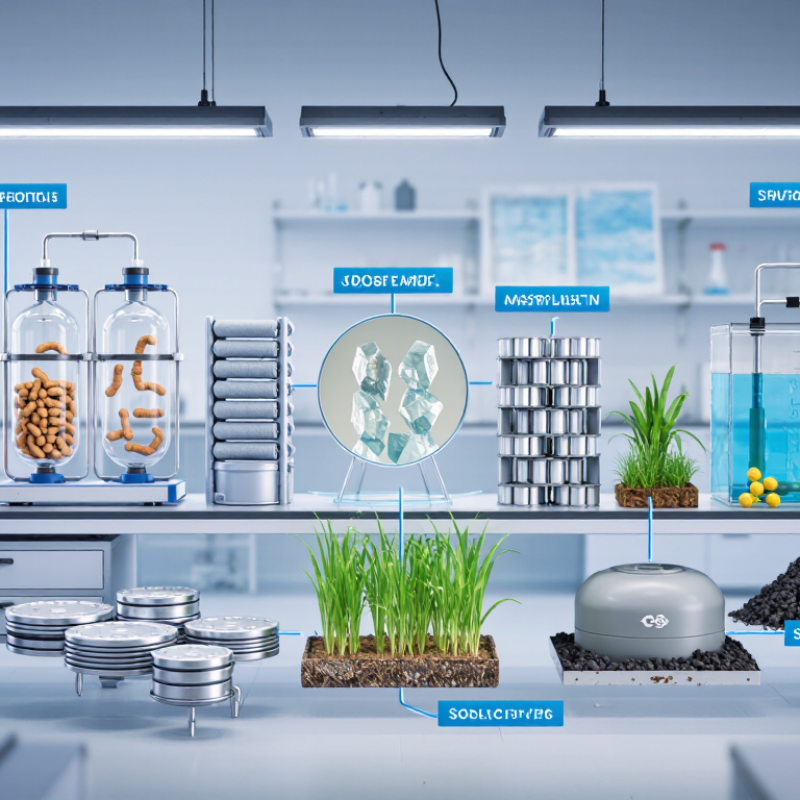
Phosphorus appears as orthophosphate, polyphosphate, organic phosphorus, and particle-bound phosphorus. Each form behaves differently during treatment. Effluent limits depend on the discharge permit, receiving water, season, and local risk of algal growth. Many facilities set an internal target below 1 mg/L, often between 0.2 and 0.8 mg/L, to protect operating flexibility.
The main removal options include chemical precipitation, metal-salt coagulation, lime treatment, enhanced biological phosphorus removal, sequencing-batch treatment, membrane bioreactors, tertiary filtration, adsorption, ion exchange, and phosphorus crystallization. Chemical treatment can reduce soluble phosphorus quickly, while biological removal may lower chemical use. Filtration captures phosphorus attached to suspended solids. Membranes can produce very low concentrations, but fouling and energy demand require close control.
Sampling must separate dissolved and total phosphorus. Otherwise, a plant may misread the real removal problem. Operators should check pH, alkalinity, sludge age, mixing, and chemical dosing points. Small dosing errors can push results above the target.
A practical design may use biological treatment first, followed by polishing filtration or carefully controlled precipitation.
Some are less predictable. Cold weather, weak influent carbon, and changing flow can reduce biological performance.
A target below 1 mg/L is achievable, but it should be verified through daily data rather than assumed from laboratory results.
Chemical, Biological, and Physical Phosphorus Removal Methods
Chemical action often delivers quick phosphorus reduction. Alum precipitation binds dissolved phosphate into settleable particles. Ferric salt precipitation works similarly, especially in clarified wastewater. Lime precipitation raises pH and forms calcium phosphate. Struvite crystallization recovers phosphorus as a usable mineral. Operators must control dosing carefully. Too much chemical creates excess sludge and higher disposal costs. Jar testing and routine orthophosphate analysis improve reliability.
Biological methods use living systems and lower chemical demand. Enhanced biological phosphorus removal stores phosphate inside specialized microorganisms. Algal uptake can remove phosphorus in sunlight-based ponds. Constructed wetlands combine plant uptake, sedimentation, and microbial activity. Results vary with temperature, oxygen, and seasonal growth. Biological treatment is not effortless. A system may perform well in summer, then weaken during cold weather.
Physical methods separate phosphorus-bearing solids or dissolved compounds. Sand filtration captures particulate phosphorus after biological treatment. Adsorption media hold phosphate on reactive surfaces. Membrane filtration can remove very small particles and dissolved contaminants. These methods need backwashing, media replacement, or energy management. A clear effluent can still contain dissolved phosphorus. For dependable control, facilities often combine chemical, biological, and physical stages, then verify performance through sampling rather than appearance alone. No single method fits every site.
| No. | Removal Method | Primary Action | Main Mechanism | Typical Phosphorus Forms Treated | Indicative Removal Performance | Key Advantages | Main Limitations and Considerations |
|---|---|---|---|---|---|---|---|
| 1 | Aluminum Salt Precipitation | Chemical | Aluminum salts react with dissolved phosphate to form low-solubility aluminum phosphate and hydroxide flocs, which are separated by clarification or filtration. | Orthophosphate and a portion of particulate phosphorus | Often 80–95% total phosphorus removal, depending on dose, pH, mixing, and solids separation. | Fast reaction; effective over a broad range of wastewater applications; easy to add to existing treatment systems. | Produces additional chemical sludge; requires chemical storage and dosing control; overdosing can increase residual metal and operating cost. |
| 2 | Iron Salt Precipitation | Chemical | Ferric or ferrous iron reacts with phosphate and forms insoluble iron-phosphate compounds and iron hydroxide flocs. | Orthophosphate and suspended or particulate phosphorus | Commonly 80–95% total phosphorus removal when precipitation and solids capture are properly controlled. | Reliable and rapid; can also improve removal of suspended solids and sulfide in some systems. | Generates sludge; may consume alkalinity and lower pH; chemical demand is influenced by competing substances and influent phosphorus concentration. |
| 3 | Lime Precipitation | Chemical | Raising pH promotes calcium phosphate precipitation and, at sufficiently high pH, magnesium hydroxide and calcium carbonate formation. | Orthophosphate and some dissolved mineral phosphorus | Approximately 70–95% removal, with performance strongly dependent on pH, hardness, and solids separation. | Uses widely available alkaline chemistry; can provide softening and phosphorus removal at the same time. | High chemical consumption; substantial sludge production; requires pH adjustment and careful handling of scaling and high-pH effluent. |
| 4 | Enhanced Biological Phosphorus Removal | Biological | Phosphorus-accumulating organisms release and then take up excess phosphate under alternating anaerobic and aerobic or anoxic conditions. Phosphorus leaves the system with waste activated sludge. | Readily biodegradable influent phosphorus, mainly as orthophosphate after biological conversion | Typically 70–95% total phosphorus removal when suitable carbon, process cycling, and sludge wasting are maintained. | Lower chemical use; phosphorus is incorporated into biomass; suitable for large municipal wastewater plants. | Sensitive to process conditions, nitrate recycle, toxic compounds, temperature, and insufficient readily biodegradable carbon; requires biological process control. |
| 5 | Algal or Plant Uptake | Biological | Algae and aquatic plants assimilate dissolved phosphorus into cellular biomass, which must be harvested to achieve permanent removal. | Dissolved orthophosphate and bioavailable phosphorus | Highly variable, commonly 30–80% in well-managed polishing systems; results depend on light, temperature, retention time, and harvesting. | Can use sunlight and natural biological processes; may also remove nitrogen and provide habitat or resource-recovery opportunities. | Large land area may be needed; seasonal performance; uncontrolled biomass decay can release phosphorus back into the water. |
| 6 | Constructed Wetlands | Biological | Phosphorus is retained through plant uptake, microbial processes, sedimentation, and adsorption or precipitation within the wetland substrate. | Particulate phosphorus and dissolved phosphate | Often 30–70% removal for long-term operation; higher short-term removal may occur with phosphorus-rich media. | Low energy demand; simple operation; provides additional removal of solids, organic matter, and some nitrogen. | Requires substantial land; phosphorus storage capacity can decline over time; performance varies with hydraulic loading, climate, and vegetation management. |
| 7 | Adsorption on Reactive Media | Physical / Chemical | Phosphate binds to iron-, aluminum-, calcium-, or lanthanum-containing surfaces through adsorption, ligand exchange, or mineral formation. | Dissolved orthophosphate | Frequently 70–99% in polishing applications, depending on media capacity, contact time, pH, and influent concentration. | Can achieve very low effluent phosphorus concentrations; compact and suitable for tertiary polishing. | Media eventually becomes exhausted; replacement or regeneration is required; competing anions and high suspended solids can reduce capacity. |
| 8 | Ion Exchange | Physical / Chemical | Anion-exchange materials replace mobile counter-ions with phosphate and other phosphorus oxyanions. | Dissolved phosphate and, with suitable media, selected phosphorus oxyanions | Approximately 80–99% under controlled conditions; actual performance depends on resin selectivity, pH, and competing anions. | High-rate treatment; compact equipment; capable of producing low phosphorus concentrations. | Resin fouling and regeneration are concerns; regeneration creates a concentrated waste stream that requires further management. |
| 9 | Membrane Filtration | Physical | Microfiltration and ultrafiltration remove phosphorus attached to particles or precipitated solids, while nanofiltration and reverse osmosis can retain dissolved phosphate. | Particulate phosphorus; dissolved phosphate with tight membranes | More than 90% is possible, particularly when phosphorus is precipitated before microfiltration or when nanofiltration or reverse osmosis is used. | Produces high-quality effluent; strong barrier for suspended solids and microorganisms; suitable for water reuse applications. | Higher energy and capital requirements; membrane fouling; concentrate or reject water must be managed; pretreatment is usually necessary. |
| 10 | Struvite or Calcium Phosphate Crystallization | Chemical / Physical | Controlled addition or recovery of magnesium, calcium, and alkalinity promotes formation of crystalline phosphorus minerals that can be separated from the water. | Dissolved orthophosphate, especially in concentrated sidestreams | Often 70–95% phosphorus recovery or removal from suitable sidestreams, depending on pH, molar ratios, seeding, and crystal separation. | Can recover phosphorus as a usable mineral product; reduces uncontrolled scaling when properly designed; useful for nutrient recovery. | Requires suitable phosphorus concentration and chemistry; pH and reagent control are important; product quality and downstream handling must be managed. |
Note: Performance ranges are indicative engineering values rather than guarantees. Actual phosphorus removal depends on influent composition, phosphorus speciation, pH, temperature, hydraulic retention time, chemical dosage, solids separation, and system design.
Chemical precipitation is a widely used phosphorus removal method. It can achieve 85–98% removal when chemical dosing, mixing, and pH are carefully controlled. Alum binds dissolved phosphate into settleable particles. Ferric salts create dense iron-phosphate flocs. Lime raises pH and forms calcium phosphate precipitates.
The chemistry is predictable. The plant is not. Influent phosphorus, alkalinity, temperature, and suspended solids can change hourly. Operators often use jar tests to compare alum, ferric salts, and lime before adjusting full-scale dosing.
A sample may show excellent removal at one pH, then weaker performance after a process change. For alum and ferric salts, rapid mixing helps distribute the chemical evenly. Gentle flocculation then allows larger particles to form. Lime may require stronger pH control and can produce more mineral scale.
There is a trade-off. Higher chemical doses may improve phosphorus removal but increase sludge production, handling costs, and residual metals. Poor mixing can leave untreated phosphate pockets. Excess lime may also raise effluent pH beyond the desired operating range. Reliable facilities track influent and effluent phosphorus, pH, alkalinity, and sludge characteristics together. Online sensors support faster decisions, but laboratory testing still matters. Data can be misleading without proper sampling. Experienced operators therefore adjust dosing gradually and record each change. A simple control strategy may work well, though seasonal variation can expose its weaknesses.
Phosphorus removal can use chemical precipitation, filtration, adsorption, biological treatment, and constructed wetlands. Among these options, biological enhanced phosphorus removal (EBPR) and wetlands deserve closer attention. EBPR uses alternating anaerobic and aerobic zones. Microorganisms store phosphorus inside their cells, which leaves the process through waste sludge.
Under stable operating conditions, EBPR systems can remove roughly 70–90% of influent phosphorus. The U.S. Environmental Protection Agency’s Nutrient Control Design Manual notes that biological systems may reach low effluent phosphorus levels when carbon supply, dissolved oxygen, and sludge age remain controlled. Small changes matter. A weak anaerobic phase can reduce performance quickly.
Constructed wetlands provide another practical pathway. Plants, gravel, biofilms, and sediment work together to capture dissolved and particulate phosphorus. Technical literature, including Treatment Wetlands by Kadlec and Wallace, reports highly variable removal rates, often influenced by loading, climate, hydraulic retention time, and media saturation. Well-designed systems may support 70–95% reduction, especially as polishing stages after biological treatment. Real plants are messier. Seasonal cold, accumulated sediment, and phosphorus release from saturated media can lower results. Field monitoring should include influent and effluent phosphorus, flow, pH, oxygen, and sediment condition. A clear sampling plan is more reliable than optimistic design figures.
Phosphorus removal becomes demanding when treated effluent must reach below 0.1 mg/L. The top ten methods include chemical precipitation, biological uptake, tertiary filtration, membranes, adsorption, ion exchange, wetlands, crystallization, electrochemical treatment, and struvite recovery. In practice, the final target usually needs several barriers.
Tertiary filtration can capture phosphorus-rich solids after chemical dosing. A well-operated filter may show clearer water, but performance can shift with flow, temperature, and sludge characteristics. Membrane systems provide a strong polishing step. However, fouling, energy demand, and concentrate disposal require careful planning. Struvite recovery offers another route. It converts dissolved phosphorus into crystals that can be separated and potentially reused as a nutrient material. Crystal growth needs controlled magnesium, pH, and retention time. Small changes matter.
Tips: Measure orthophosphate and total phosphorus separately. Check samples at peak flow, not only during quiet daytime hours. Keep backup filtration available. A single laboratory result can mislead operators. Online monitoring helps, but sensors still need cleaning and calibration. Jar testing should use actual wastewater, because synthetic water often behaves too perfectly. Reaching below 0.1 mg/L is possible, yet the system may not remain stable without frequent review. Operators should track chemical use, membrane pressure, filter headloss, and recovered solids together. That wider record reveals hidden trade-offs.
Representative total phosphorus removal performance for technologies used in advanced treatment and systems targeting effluent below 0.1 mg/L
Values are indicative engineering benchmarks compiled from commonly reported treatment ranges. Actual performance depends on influent phosphorus, process design, chemical dosing, solids separation, temperature, and operating conditions. Membranes, adsorption, ion exchange, and optimized tertiary processes generally require additional polishing to consistently achieve ultra-low phosphorus concentrations.
Paul Zhou:8613356391894
Eric Wong:8615963245439
Emily Wu:8617866856171