What is Oilfield Additives and How Are They Used?
Oilfield additives play a crucial role in the oil and gas industry. These chemicals enhance the efficiency of drilling operations. As Dr. Emily Carter, a leading expert in oilfield chemistry, noted, "Oilfield additives are the unsung heroes of drilling success." Their importance can’t be overstated.
These additives are diverse, including lubricants, surfactants, and fluid loss control agents. Each type serves specific functions and addresses unique challenges. For example, lubricants reduce friction, allowing rotary drilling to perform better. Surfactants improve fluid interactions, making them vital in challenging formations.
Yet, the use of oilfield additives is not without challenges. Not every additive works perfectly under every condition. Field data often reveals discrepancies in performance. This unpredictability can lead to costly setbacks. Thus, ongoing research and development in oilfield additives remain essential to enhance their application and reliability.
Definition of Oilfield Additives and Their Types
Oilfield additives play a crucial role in enhancing drilling operations and production efficiency. They are substances that modify fluid properties to meet specific requirements. There are several types of oilfield additives, each designed for different applications.
One common type is viscosifiers, which increase fluid viscosity. This helps carry rock cuttings to the surface. Another important group includes surfactants, which reduce surface tension. They improve the wetting of surfaces and enhance flow.
There's also spotting fluids, designed to address stuck pipe situations. These additives help free the stuck equipment.
Additives can sometimes lead to unwanted reactions. Incompatibility with other materials can occur. It's essential to test these additives in controlled environments first. Understanding their interactions is vital. This approach minimizes risks and promotes safe usage.
However, spending time on this testing can feel like a hurdle but is ultimately worth it. Careful consideration ensures effective operation in the field.
Role of Oilfield Additives in Drilling Operations
Oilfield additives play a vital role in drilling operations. These substances enhance the efficiency and safety of the drilling process. They adjust the properties of drilling fluids, which are crucial for carrying cuttings and cooling the drill bit. Without these additives, drilling could face significant challenges.
One common type of additive is a viscosifier. It thickens drilling fluids to improve their carrying capacity. This allows for better removal of debris from the wellbore. However, achieving the right viscosity is not always easy. Too thick, and the fluid may not flow well; too thin, and it won’t lift the cuttings effectively. Striking the right balance requires careful monitoring and adjustment.
Another additive is a fluid loss control agent. It helps to minimize the loss of fluid into permeable rocks. This can prevent issues like wellbore instability or formation damage. Yet, overusing these agents can lead to complications. For instance, they may create unwanted filtration or gel strength, which can impede fluid movement. Addressing these challenges is essential for optimizing drilling performance. Each additive has its specific advantages and drawbacks to consider.
Usage of Oilfield Additives in Drilling Operations
This bar chart illustrates the various types of oilfield additives used in drilling operations and their respective usage percentages. Drilling fluids are the most commonly used additives, followed by mud thinners and viscosity enhancers.
Common Applications of Oilfield Additives in Production
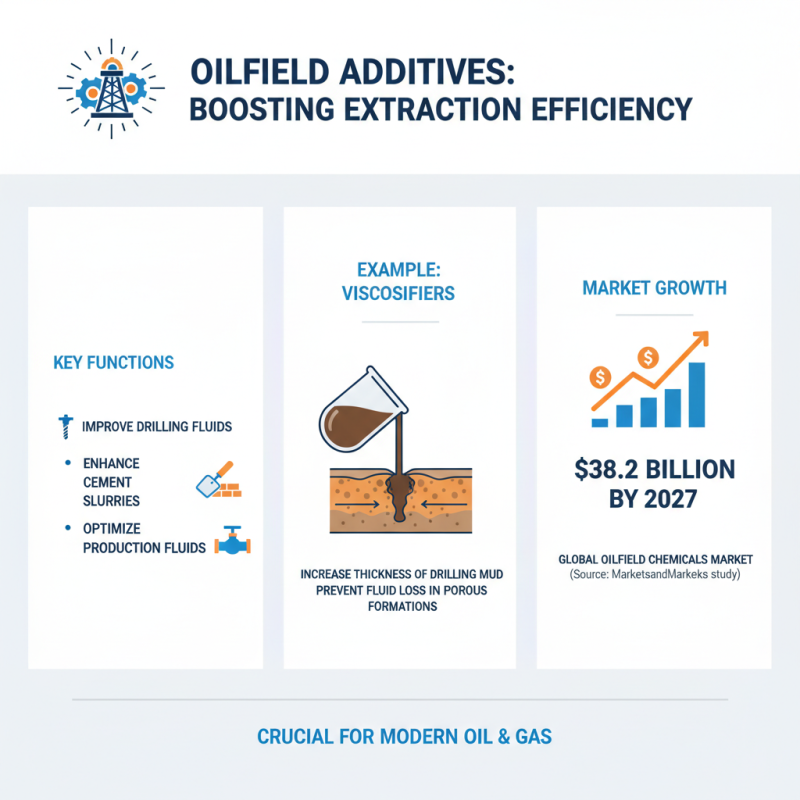
Oilfield additives play a crucial role in enhancing the efficiency of oil extraction processes. These additives can improve drilling fluids, cement slurries, and production fluids. For example, viscosifiers are commonly used to increase the thickness of drilling mud, preventing the loss of fluid in porous formations. According to a study by MarketsandMarkets, the global oilfield chemicals market is projected to reach $38.2 billion by 2027, indicating a growing reliance on these specialized substances.
In production, oilfield additives serve multiple purposes. Surfactants, for instance, reduce the surface tension of oil-water mixtures, ensuring better separation during extraction. Moreover, corrosion inhibitors protect equipment from degradation, which is vital for maintaining operational integrity. A report from Grand View Research highlights that the demand for corrosion inhibitors is expected to grow by 6% annually over the next five years. However, the effectiveness of additives can vary based on environmental conditions and the chemical composition of the fluids.
Despite their advantages, challenges exist in the application of oilfield additives. Sometimes, the interaction between different chemicals can lead to unforeseen reactions. Data from the Society of Petroleum Engineers suggests that improper additive use may result in unexpected equipment wear and increased downtime. Therefore, careful selection and testing of oilfield additives are essential for optimizing production outcomes.
Factors Influencing the Selection of Oilfield Additives
Selecting the right oilfield additives requires careful consideration. Different factors come into play. The type of drilling being conducted is crucial. Additives can enhance fluid properties, but they must match the specific type of well. For example, wells with high temperatures may need additives that withstand extreme conditions.
Another factor is the geological formation. Each formation has unique characteristics. Some additives work better in sandstone, while others are suited for shale. Testing is often necessary. A miscalculation can lead to inefficient drilling. Understanding the local geology helps in making informed choices.
Cost also influences selection. High-performance additives might be tempting, but they can drive up expenses. Companies must weigh the benefits against their budgets. Environmental impact is an additional concern. It’s vital to choose additives that minimize harm. Striking a balance between performance and sustainability is challenging. Each decision can have lasting effects on operations.
What is Oilfield Additives and How Are They Used? - Factors Influencing the Selection of Oilfield Additives
| Additive Type |
Function |
Application |
Key Factors for Selection |
| Viscosity Modifiers |
Increase or decrease the viscosity of the drilling fluid |
Drilling mud formulations |
Temperature, pressure, and type of formation |
| Fluid Loss Control Agents |
Reduce fluid loss to the formation |
Primary in water-based muds |
Permeability of the formation and mud properties |
| Surfactants |
Improve wetting properties and reduce surface tension |
Enhancing oil recovery and cleaning |
Oil type, temperature, and salt concentration |
| Corrosion Inhibitors |
Prevent corrosion of metal equipment |
Used in pipelines and drilling rigs |
Type of metal, environment, and presence of corrosive agents |
| Weighting Agents |
Increase the density of drilling fluids |
Prevent wellbore collapse |
Depth of the well and formation pressure |
Environmental Considerations and Regulations for Oilfield Additives
Oilfield additives play a critical role in enhancing oil extraction and production efficiency. However, their environmental impact cannot be overlooked. The use of certain additives raises concerns about water contamination and soil degradation. Regulations vary globally, but many jurisdictions impose strict limits on chemical use to protect ecosystems.
In the United States, the Environmental Protection Agency (EPA) monitors oilfield additives closely. A report estimates that over 1,000 different chemicals may be used in various formulations. Some of these chemicals are hazardous and can significantly harm local wildlife. Studies have shown that exposure to certain additives can lead to adverse health effects in humans. Awareness of these issues is vital for industry stakeholders.
Tips: Always consult the latest compliance regulations in your area. Transparency in additive composition is crucial for community trust. Regular environmental impact assessments can help identify potential risks and mitigate them effectively. Recognizing the fine balance between efficiency and safety will guide better practices in the industry. Continuous improvement is an ongoing journey, not a destination.