How to Use Natural Flocculants for Effective Water Treatment?
Water treatment is crucial for public health and environmental safety. Traditional methods often rely on chemicals that can harm ecosystems. In contrast, natural flocculants offer an eco-friendly alternative. These substances can efficiently clarify water by promoting the aggregation of particles. A report by the Global Water Intelligence states that the use of natural flocculants is increasing, as communities seek sustainable solutions.
Dr. Emily Kline, an expert in sustainable water treatment, emphasizes, "Natural flocculants are not just a trend; they represent a paradigm shift in how we approach water purification." This shift is backed by evidence showing that natural flocculants can reduce chemical usage by up to 30%. However, the effectiveness can vary based on application techniques and water quality parameters.
While promising, relying solely on natural flocculants presents challenges. Users must understand the variables involved, like pH and temperature. Research is ongoing, and results are not always reliable. By exploring the potential of natural flocculants, we can pave the way for more effective and sustainable water treatment systems.
Understanding Natural Flocculants: Definition and Types
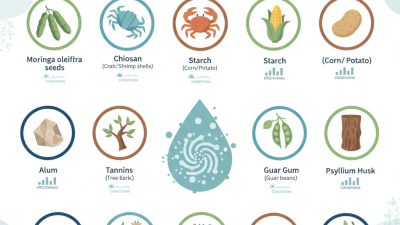
Natural flocculants play a significant role in water treatment processes. These are natural substances that promote the agglomeration of suspended particles, enhancing water clarity. Common types include plant-based materials like alginates from seaweed and tannins from tree bark. These compounds can effectively reduce turbidity, making them a valuable resource in managing water quality.
Understanding their function is crucial for optimal use. They work by neutralizing charges in water, causing particles to clump together. This process, called flocculation, leads to easier removal of impurities. It's essential to recognize that the effectiveness of natural flocculants can vary based on environmental factors such as pH and temperature. Sometimes they may not perform as intended, highlighting the importance of thorough testing before application.
While natural flocculants offer an eco-friendly alternative, they are not a one-size-fits-all solution. Their availability and consistency can differ significantly. Users must sometimes adapt their methods to local conditions. Researching local sources and understanding specific water characteristics is vital. Incomplete understanding of these materials can lead to underwhelming results, prompting reflection and adjustment in strategy.
The Science Behind Flocculation: Mechanisms and Processes
Flocculation is a crucial process in water treatment,
where fine particles agglomerate to form larger flocs. This process significantly enhances
water clarity and purity. Natural flocculants, derived from
plant or mineral sources, are beneficial for this purpose. They work by altering the surface charge of particles,
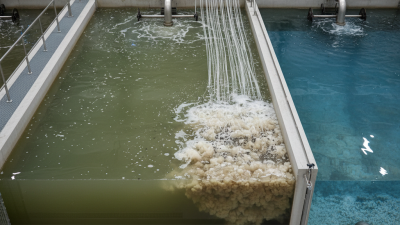
promoting aggregation. When a natural flocculant is added to water, it creates conditions conducive to floc formation.
The effectiveness of natural flocculants relates to their unique composition. For instance,
polysaccharides found in certain plants can attract suspended
particles. These particles then bind together, settling at the bottom. However, the efficiency can vary.
Some natural flocculants might require specific pH levels to work optimally. Testing and adaptation are essential
for effective results. Observing the interactions and adjusting the dosage can lead to better outcomes.
Using natural flocculants can be challenging. Different water sources and contaminants may react unpredictably.
The treatment process might take longer than expected. It's critical to monitor the results carefully. Regular
testing helps ensure the treated water meets safety standards. Despite the obstacles, natural flocculants represent
a sustainable alternative for cleaner water. Exploring their potential encourages more environmentally friendly water treatment options.
Application of Natural Flocculants: Sourcing and Preparation
Natural flocculants have become essential in water treatment due to their effectiveness and eco-friendliness. Sourcing these natural materials typically involves investigating local plant species known for their flocculating properties. Moringa oleifera seeds, for example, are widely recognized for their ability to clarify turbid water. Research has shown that just 0.5 grams of Moringa can flocculate up to 1 liter of contaminated water, making it a powerful resource for communities lacking conventional treatment systems.
Preparation is crucial for maximizing the efficiency of natural flocculants. The seeds must be properly processed, often requiring drying and grinding. A particle size of 100 microns is ideal for optimal dispersion in water. A study by the World Health Organization highlighted that reducing the particle size improves sedimentation rates, allowing for quicker removal of impurities. Despite these benefits, careful monitoring is needed to determine the right dosage. Overuse can lead to excessive sedimentation, complicating subsequent filtration stages.
While natural flocculants present a viable alternative, challenges exist. Availability can vary by region, affecting consistency in treatment. Additionally, their effectiveness can be influenced by the water's specific characteristics, including temperature and pH levels. Continuous experimentation and local adaptation are essential for overcoming these hurdles and ensuring reliable water treatment outcomes.
Natural Flocculants for Water Treatment Effectiveness
Effectiveness of Natural Flocculants: Industry Statistics and Case Studies
Natural flocculants have gained traction in water treatment due to their environmental benefits and effectiveness.
According to a report by the World Health Organization, the efficiency of natural flocculants can reach up to 90% in removing suspended solids from wastewater.
Case studies demonstrate this efficacy in various settings, including agriculture and municipal water systems.
In one study, the use of plant-based flocculants resulted in a 30% cost reduction compared to synthetic alternatives.
This showcases not only the environmental advantages but also the economic potential. However, challenges remain in terms of consistency and availability throughout the year.
Seasonal variations can impact the quality of these natural products, leading to fluctuations in treatment effectiveness.
Industry experts emphasize the need for further research on optimizing extraction processes. While data supports the benefits of natural flocculants, implementing them on a wide scale requires overcoming some technical hurdles.
Continuous dialogue among researchers, practitioners, and policymakers will be crucial for addressing these challenges and maximizing the potential of natural flocculants in water treatment.
Regulatory Standards and Guidelines for Water Treatment Using Flocculants
When implementing natural flocculants for water treatment, adherence to regulatory standards is crucial. Different regions set specific guidelines that govern the use of flocculants. These regulations ensure public health and environmental safety. Organizations must familiarize themselves with local, national, and international standards, such as those from the World Health Organization.
Monitoring flocculant types is important. Some natural options are more effective than others. For instance, starch-based flocculants may perform differently under various water quality conditions. Testing and measuring results help ensure compliance with established standards. Facilities should conduct routine checks and adjust processes accordingly.
Documentation plays a key role in regulatory adherence. Detailed records of flocculant use, water quality tests, and treatment outcomes must be maintained. This not only demonstrates compliance but also provides a framework for continuous improvement. Regular audits can reveal gaps in processes. Identifying these areas is essential for enhancing overall treatment effectiveness.