How to Choose Polyacrylamide CAS 9003 05 8?

Choosing Polyacrylamide CAS 9003 05 8 requires more than comparing prices. This polymer supports wastewater clarification, mineral processing, papermaking, and sludge dewatering. Its performance depends on charge type, molecular weight, hydrolysis level, and solution behavior. The wrong grade may leave cloudy water, weak flocs, or excessive chemical consumption.

Industry data shows why selection matters. Grand View Research identifies water treatment as a major driver of polyacrylamide demand, supported by stricter discharge standards and expanding municipal infrastructure. MarketsandMarkets also describes wastewater treatment, oil recovery, mining, and pulp production as important application sectors. These reports indicate steady market growth, but their figures vary by scope, region, and product definition. That difference deserves attention.

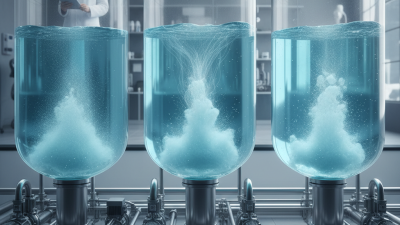
A reliable buying process starts with the treatment objective. An anionic grade may suit mineral suspensions, while cationic grades often support sludge dewatering. Nonionic products can perform better in selected water chemistries. Jar testing remains essential. Observe floc size, settling speed, filtrate clarity, and residual turbidity in a transparent beaker. Small details matter.

Review the technical data sheet carefully. Check active content, viscosity, particle size, dissolution time, packaging, and storage conditions. Confirm the supplier’s quality system and batch traceability. The U.S. Environmental Protection Agency emphasizes process control and verified treatment performance, rather than relying on chemical names alone. One limitation remains: laboratory results may not fully represent seasonal plant conditions. Therefore, choose Polyacrylamide Cas through application testing, documented specifications, and realistic operating data.

How to Choose Polyacrylamide CAS 9003 05 8?

What Is Polyacrylamide CAS 9003-05-8?

Polyacrylamide, commonly identified by CAS 9003-05-8, is a synthetic, water-soluble polymer. It is made by linking acrylamide units into long molecular chains. These chains can bind water, improve particle settling, and change liquid flow. The material is not one uniform product. Its molecular weight, charge density, particle form, and residual monomer level can differ significantly. These differences often determine performance more than the CAS number alone.

In water treatment, anionic, cationic, and nonionic grades suit different chemical conditions. Anionic grades often support mineral-rich suspensions. Cationic grades commonly interact with organic solids. Nonionic options may suit narrower conditions.

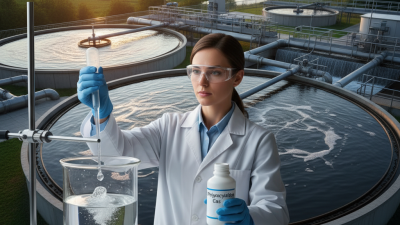
Jar testing is essential. A small dose is mixed into cloudy water, then floc size, settling speed, and clarity are observed. A practical mistake is adding more polymer when mixing is actually too aggressive. Fragile flocs can break apart.

When choosing Polyacrylamide CAS 9003-05-8, request a technical data sheet and certificate of analysis. Check active content, viscosity, ionic character, moisture, particle size, and residual acrylamide. Match the grade with the application, water chemistry, and local requirements.

Do not judge quality by appearance alone. A bright powder can still perform poorly in unsuitable conditions. Repeat testing may feel slow, but it exposes weak assumptions before full-scale use.

Which Polyacrylamide Form Fits Your Application?

How to Choose Polyacrylamide CAS 9003 05 8?

Which Polyacrylamide Form Fits Your Application?

Polyacrylamide is available as powder, aqueous solution, and water-in-oil emulsion. The right form depends on mixing speed, dosing equipment, storage space, and required activation time. Powder is economical for large plants, but it needs controlled wetting. Poor dispersion can create stubborn fish-eyes in the make-up tank. Emulsion activates faster, although it usually requires careful inversion and dilution. Liquid solution is convenient for automated dosing, but transport costs may rise.

Charge type matters just as much. Cationic grades commonly support sludge dewatering, while anionic grades often assist mineral processing and clarification. Nonionic grades can suit sensitive systems with changing water chemistry. A jar test should measure turbidity, settling time, filter-cake moisture, and polymer consumption. Guessing from a product label is not enough.

The 2024 United Nations World Water Development Report states that agriculture accounts for approximately 70% of global freshwater withdrawals. This pressure makes efficient solid-liquid separation increasingly important. The WHO and UNICEF Joint Monitoring Programme reported in 2023 that 2.2 billion people lacked safely managed drinking water, highlighting the need for reliable treatment processes. These figures do not select a polymer for you. They show why small dosing errors matter. In practice, I would compare powder and emulsion beside the same wastewater sample, then repeat the test after overnight storage. Real water rarely behaves perfectly.

How to Choose Polyacrylamide CAS 9003 05 8? - Which Polyacrylamide Form Fits Your Application?
Selection guidance for polyacrylamide (PAM). Actual performance depends on polymer structure, charge density, molecular weight, water quality, dosage, mixing conditions, and process testing.
PAM Form or Type Typical Ionic Character Physical Form Key Selection Characteristics Common Applications Advantages Important Handling or Process Notes
Anionic PAM Powder Anionic; commonly produced by partial hydrolysis or copolymerization with anionic monomers Free-flowing, water-soluble powder or granule Often selected in medium- to high-molecular-weight grades. Charge density and molecular weight should match the mineral content and suspended-solids characteristics. Mineral processing, coal washing, tailings treatment, municipal wastewater clarification, sludge dewatering, and some papermaking processes High active-polymer content; efficient for bridging suspended mineral particles and forming relatively strong flocs Disperse slowly into water to prevent fisheyes. Allow adequate maturation time and avoid excessive shear after floc formation.
Cationic PAM Powder Cationic; supplied in grades with different cationic charge densities Water-soluble powder or granule Charge density is usually more important than molecular weight when treating negatively charged organic solids, especially biological sludge. Wastewater sludge dewatering, sludge thickening, dissolved-air flotation, paper and pulp processing, and some industrial effluent treatments Strong interaction with negatively charged organic particles; can improve solid-liquid separation when correctly selected Performance is sensitive to sludge composition, pH, alkalinity, and organic loading. Jar testing or dewatering trials are recommended.
Nonionic PAM Powder Nonionic or very low ionic character Water-soluble powder or granule Useful where a low-charge polymer is preferred or where water chemistry could interfere with highly charged products. Selected mineral processing, sediment control, clarification, and specialty solid-liquid separation processes Lower electrostatic interaction; may be useful in systems with variable ionic composition or near-neutral surface charge Usually requires careful adjustment of dosage and mixing because flocculation may rely more on adsorption and polymer bridging than charge neutralization.
Amphoteric PAM Contains both cationic and anionic groups Water-soluble powder, emulsion, or solution depending on grade Designed for complex feeds in which particle charge, pH, or sludge composition changes during treatment. Complex industrial wastewater, paper and pulp applications, sludge conditioning, and processes with fluctuating feed chemistry Can provide broader operating flexibility than a single-charge polymer in selected systems Product selection is application-specific. The balance of cationic and anionic groups must be evaluated under actual process conditions.
Dry Powder or Granular PAM May be anionic, cationic, nonionic, or amphoteric Dry solid with high active-polymer concentration Best suited to operations that can provide controlled make-down, wetting, aging, and dosing equipment. Large wastewater plants, mining operations, municipal treatment, paper production, and bulk industrial use Lower shipping water content; generally favorable storage efficiency and long-term inventory management Dust control, dry storage, and correct dilution are important. Wet powder can create extremely slippery surfaces.
Water-in-Oil Emulsion PAM Available in anionic, cationic, nonionic, or amphoteric grades Liquid emulsion containing dispersed polymer and an oil phase Chosen when rapid preparation and liquid handling are more important than maximum dry-solids concentration. Continuous wastewater treatment, sludge dewatering, clarification, and installations with liquid polymer dosing systems Fast activation compared with many dry products; convenient for automated liquid dosing Requires controlled inversion and dilution. Storage stability, freezing protection, agitation, and compatibility with dosing equipment should be checked.
Aqueous PAM Solution May be anionic, cationic, nonionic, or amphoteric Pre-dissolved or partially prepared liquid solution Useful where immediate dosing is required and the facility has limited powder make-down capability. Smaller treatment systems, laboratory or pilot plants, short-term campaigns, and processes requiring ready-to-use liquid feed Simple dosing and reduced powder-dispersion issues Usually has lower polymer concentration and higher transport cost than dry products. Viscosity, shelf life, and biological stability require attention.
Very High-Molecular-Weight PAM Can be anionic, nonionic, or other ionic types Most commonly supplied as dry powder or emulsion Selected when long-chain bridging and large, shear-sensitive flocs are required. Mineral tailings, coal washing, sediment settling, clarification, and some sludge processes Can produce large flocs at appropriate dosage and mixing intensity Overdosing or excessive mechanical shear may increase viscosity or break flocs. Optimize rapid mixing and gentle flocculation separately.
Lower- to Medium-Molecular-Weight PAM Can be anionic, cationic, nonionic, or amphoteric Dry powder, emulsion, or liquid solution Often considered when faster diffusion, lower solution viscosity, or compact floc formation is preferred. Sludge conditioning, clarification, paper processes, and applications with limited mixing energy Can be easier to dissolve and dose than very high-molecular-weight grades; may provide better control in compact equipment May not provide enough bridging for coarse or highly mineralized solids. Confirm settling rate, filtrate quality, and cake properties by testing.
Partially Hydrolyzed PAM Anionic character created by conversion of some amide groups to carboxylate groups Usually dry powder or emulsion Charge density varies with the degree of hydrolysis and influences adsorption, bridging, and sensitivity to water chemistry. Mineral processing, enhanced oil recovery, water clarification, soil conditioning, and erosion-control applications Combines long-chain polymer bridging with anionic functionality Calcium, magnesium, salinity, pH, and temperature can affect conformation and performance. Evaluate the product using representative process water.

How to Evaluate Molecular Weight and Charge Type

Choosing Polyacrylamide CAS 9003-05-8 requires more than comparing prices. Molecular weight and charge type usually control floc formation, settling speed, and sludge dewatering. Commercial grades commonly range from about 5 to 30 million Daltons, although test methods can produce different values. A higher molecular weight often creates stronger polymer bridges. It may also dissolve more slowly and produce fish-eyes.

Charge type needs closer attention. Anionic polyacrylamide suits many mineral suspensions and wastewater streams containing positively charged particles. Cationic grades often perform better with biological sludge and negatively charged solids. Nonionic grades can help when water chemistry changes sharply. The charge density matters as much as the label. For example, a 20% anionic product may outperform a 40% product in one wastewater, but fail in another. Jar testing is essential.

The U.S. Environmental Protection Agency’s 2022 Polyacrylamide Supply Chain Profile identifies water treatment, mining, and paper production as major application sectors. A 2024 market report from Grand View Research estimates the global polyacrylamide market will grow at roughly 6% annually through 2030. This growth reflects broader treatment demand, not automatic suitability. Test at the actual pH, temperature, and solids concentration. Measure turbidity, settling time, filtrate clarity, and residual moisture. Start with several molecular-weight and charge-density combinations. Cheap selection can become expensive rework. I would not trust a specification sheet alone.

What Quality and Safety Standards Should You Check?

How to Choose Polyacrylamide CAS 9003-05-8?

When choosing polyacrylamide, check quality documents before comparing prices. The certificate of analysis should identify CAS 9003-05-8, production lot, appearance, moisture, molecular weight, charge type, and charge density. It should also report residual acrylamide, because this impurity requires careful control. Ask whether testing follows recognized laboratory methods and whether results are traceable to the specific batch.

Safety depends on the intended use. For drinking-water treatment, verify compliance with the relevant national or regional standard, such as NSF/ANSI/CAN 60 where applicable. Industrial grades need a current safety data sheet, clear hazard labeling, storage instructions, and disposal guidance. The supplier should provide batch traceability and an independent test report when risk is significant. Do not accept a generic certificate. It may describe another grade or an older shipment.

Tips: Request a small sample and test it under real operating conditions. Observe dissolution time, gel formation, settling performance, and dust behavior. Use gloves, eye protection, and suitable respiratory controls during powder handling. A white appearance proves very little. I would also review packaging seals and the manufacturing date, although these details are easy to overlook. Standards differ by country and application, so confirm requirements with a qualified safety professional before purchase.

How to Compare Suppliers and Select the Right Product?

How to Choose Polyacrylamide CAS 9003-05-8?

Comparing suppliers starts with treatment performance, not price. Ask for molecular weight, charge density, active content, particle size, and dissolution time. These values affect floc size, settling speed, and sludge volume. A reliable supplier should provide a current certificate of analysis, safety data sheet, batch number, and residual acrylamide results.

The WHO Guidelines for Drinking-water Quality list 0.5 μg/L as the guideline value for acrylamide in drinking water. Therefore, monomer control deserves careful attention.

A polished datasheet is not enough.

Request samples from at least two production batches. Run jar tests using your actual water, temperature, pH, and mixing speed.

Record dosage, turbidity, filterability, and settling time. Suppliers should explain their test method clearly.

ISO 9001 certification can support quality control, but it does not prove that one grade fits your process. Check delivery records, packaging integrity, technical response time, and change-notification procedures.

A cheaper product may create higher sludge handling costs. That trade-off is easy to miss.

Tips: Build a comparison sheet with weighted scores.

performance
40%
compliance
25%
consistency
20%
logistics
15%

Keep unopened samples for future checks. Do not choose from one jar test alone. Results can shift after seasonal water changes. Re-test before signing a long-term contract.

WhatsApp Online Chat !