
2026 How to Choose Anionic Flocculant for Water Treatment?
Choosing the right Anionic Flocculant can determine whether a treatment system produces clear water or unstable, wet sludge. In 2026, water professionals face changing regulations, variable raw water, and pressure to reduce chemical waste. A product that performs well in one plant may fail after a seasonal rainfall event.
Start with the water, not the product label. Measure turbidity, suspended solids, pH, alkalinity, temperature, and competing ions. Then compare flocculant charge density, molecular weight, dissolution behavior, and active concentration. A simple jar test can reveal more than a polished technical brochure. Watch the floc form. Check settling speed. Inspect the supernatant and sludge texture.
Small details matter.
Operators should test several dosages around the expected range, rather than choosing the strongest polymer automatically. Excessive dosing may create slippery sludge, raise operating costs, or leave residual polymer concerns. Mixing energy also matters. Shear can break fragile flocs before clarification. This is where practical experience becomes valuable, although experience alone is not enough.
A reliable selection process combines laboratory data, site trials, supplier documentation, and verified performance records. Request a safety data sheet, certificate of analysis, recommended preparation method, and storage guidance. Confirm that the product suits the intended water source and complies with applicable local requirements. No universal formula works everywhere. I have seen apparently similar waters respond differently within days. That uncertainty deserves attention, not assumptions. The following guide explains how to evaluate an Anionic Flocculant with clearer criteria, realistic testing, and room for correction when results disappoint.
What Is an Anionic Flocculant and How Does It Work?
2026 How to Choose Anionic Flocculant for Water Treatment?
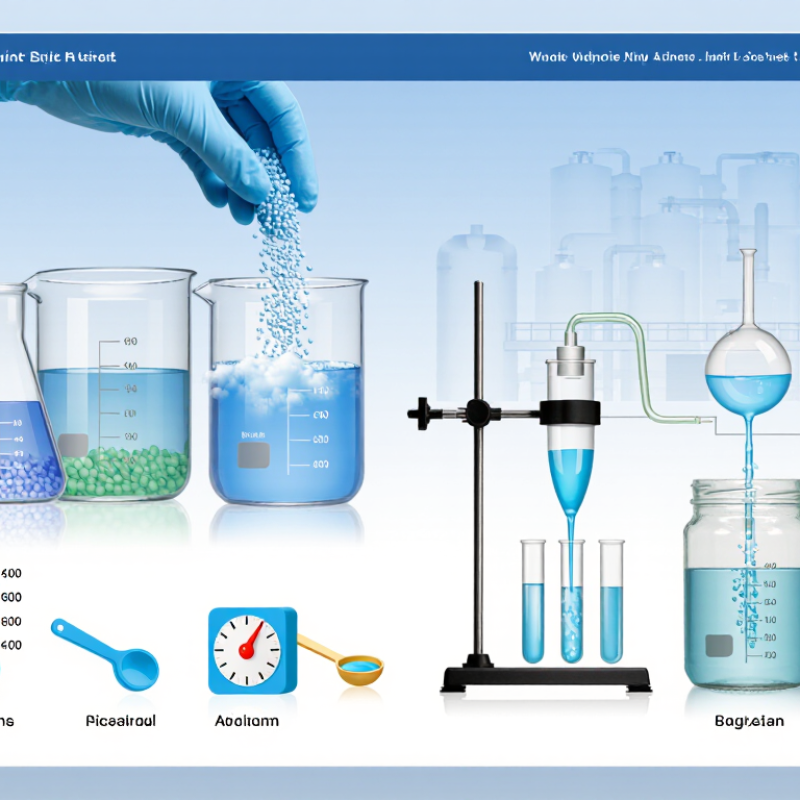
An anionic flocculant is a water-soluble polymer with negatively charged functional groups. It helps tiny suspended particles join into larger, heavier flocs. These flocs settle faster or separate more easily during filtration. The polymer usually works through adsorption and bridging. One chain attaches to several particles, creating a visible network. Anionic flocculants often perform well with mineral solids, metal hydroxides, and some industrial slurries. They are not a magic fix.
Performance depends on water chemistry. pH, particle charge, temperature, and mixing energy can change the result. A qualified operator should begin with a jar test, using the actual process water. Add the polymer gradually. Watch floc size, settling speed, water clarity, and sludge texture. Excess dosage may produce slimy flocs or cloudy water. Insufficient mixing may leave the polymer unevenly distributed. This is where theory sometimes meets an inconvenient reality.
Tips: Prepare the solution correctly. Allow enough hydration time. Avoid violent mixing after flocs appear. Record dosage and settling time for each test. Check results under changing flow conditions, not only during stable operation. Choose the lowest effective dose, then confirm it through routine monitoring. A clear supernatant is useful, but it should not be the only measure. Filterability and sludge handling matter too.
2026 How to Choose Anionic Flocculant for Water Treatment? - What Is an Anionic Flocculant and How Does It Work?
| Selection Dimension | What It Means | Typical Guidance | Why It Matters |
|---|---|---|---|
| Definition | An anionic flocculant is a water-soluble polymer containing negatively charged functional groups, commonly carboxylate groups. | It is commonly based on partially hydrolyzed polyacrylamide or related water-soluble polymers. | The negative charge helps the polymer interact with positively charged particles and metal hydroxide precipitates. |
| How It Works | The polymer adsorbs onto suspended particles and links several particles together through polymer bridging. | Coagulation may first reduce particle charge; the anionic polymer then promotes larger, stronger flocs. | Larger flocs generally settle, float, or filter more efficiently than individual fine particles. |
| Main Application | Used for solid–liquid separation in municipal, industrial, mining, mineral-processing, and sludge-treatment systems. | Common targets include suspended solids, metal hydroxide flocs, mineral particles, and activated-sludge solids. | The correct polymer can improve clarification, thickening, dewatering, and filtration performance. |
| Particle Charge | Particle charge indicates whether an anionic polymer is likely to adsorb effectively. | Anionic products are often considered for positively charged or charge-neutralized solids; negatively charged solids may require a cationic or nonionic alternative. | Charge mismatch can produce weak flocs, poor settling, high dosage, or unstable operation. |
| Charge Density | Charge density describes the relative amount of ionic charge along the polymer chain. | Low, medium, and high charge grades are selected according to water chemistry and particle surface properties; exact ranges vary by supplier and test method. | Higher charge does not automatically mean better performance because adsorption and bridging must remain balanced. |
| Molecular Weight | Molecular weight affects chain length, bridging capacity, solution viscosity, and floc strength. | Higher-molecular-weight grades are often evaluated for large or shear-sensitive flocs; lower grades may disperse more easily. | An excessively long chain may increase mixing sensitivity or solution viscosity, while an insufficient chain may form weak flocs. |
| Hydrolysis Degree | The hydrolysis degree represents the proportion of polymer units carrying anionic functionality. | A practical starting range for partially hydrolyzed products is often about 5–30%, but the usable grade depends on the process water. | It influences charge interaction, solubility, adsorption, and polymer response to dissolved salts. |
| pH Compatibility | Water pH changes particle charge, metal-hydroxide formation, and polymer ionization. | Test the polymer at the actual operating pH. Many anionic polymers perform across a broad range, but the optimum is application-specific. | A polymer selected without pH testing may show inconsistent floc formation and settling. |
| Water Temperature | Temperature affects viscosity, reaction rates, settling behavior, and polymer dissolution. | Conduct jar tests at representative seasonal temperatures whenever the water temperature changes significantly. | A grade that works in warm water may require different mixing or contact conditions in cold water. |
| Inorganic Coagulant Compatibility | Anionic flocculants are frequently used after coagulants such as alum, ferric salts, or polyaluminum-based coagulants. | Optimize coagulant type, dose, rapid-mix conditions, polymer dose, and flocculation time together. | The coagulant can create adsorption sites and improve the polymer’s bridging performance. |
| Solution Preparation | Dry polymer must be dispersed and hydrated before dosing; liquid products also require controlled dilution when specified. | Typical working-solution concentrations are approximately 0.05–0.5%, depending on product and equipment. Use gentle agitation and adequate maturation time. | Poor preparation can cause fish-eyes, undissolved particles, blocked dosing lines, and reduced performance. |
| Mixing Conditions | Mixing must distribute the polymer without breaking newly formed flocs. | Use rapid dispersion followed by slower flocculation; optimize mixing intensity and contact time through testing. | Insufficient mixing causes uneven dosing, while excessive shear can destroy floc structure. |
| Typical Starting Dosage | Dosage depends on suspended solids, particle size, water chemistry, and separation equipment. | A preliminary laboratory screening range may be about 0.1–10 mg/L for clarification, while sludge dewatering can require substantially higher doses. | The lowest dose that meets clarified-water and sludge-performance targets is generally preferred. |
| Jar Testing | Jar testing compares polymer grades and dosages under controlled conditions before full-scale use. | Record dosage, pH, mixing sequence, floc size, settling rate, supernatant turbidity, and sludge volume. | Testing is more reliable than choosing a polymer from charge density or molecular weight alone. |
| Clarified-Water Quality | Performance is measured by the quality of water leaving the separation step. | Monitor turbidity, total suspended solids, color, residual coagulant, and other site-specific parameters. | A large floc is not sufficient if the final water quality does not meet the process target. |
| Sludge Dewatering | For belt presses, centrifuges, filter presses, and screw presses, the polymer conditions sludge for water release. | Evaluate cake solids, filtrate clarity, capture rate, throughput, and polymer consumption. | The best clarification product may not be the best dewatering product. |
| Salt and Mineral Content | Dissolved salts and multivalent ions can change polymer conformation and particle interactions. | Test with actual process water, especially when conductivity, hardness, calcium, magnesium, or metal concentrations are high. | Results obtained with clean laboratory water may not represent field performance. |
| Environmental and Safety Review | The polymer must be handled, stored, and applied according to its safety documentation and local requirements. | Review residual monomer information, application restrictions, aquatic-discharge requirements, dust control, and spill response procedures. | Technical performance must be balanced with worker safety, regulatory compliance, and environmental protection. |
| Final Selection Rule | Choose the product that provides stable separation under actual operating conditions. | Compare at least several charge-density and molecular-weight options using representative water and a controlled jar-test procedure. | The optimum choice is determined by total operating results, including dose, water quality, sludge handling, equipment response, and cost per treated volume. |
Note: Dosage ranges and polymer properties are general industry screening guidelines. Actual selection should be confirmed by laboratory jar testing and, where necessary, a full-scale process trial using representative water.
Related Posts
-
What is Anionic Flocculant? Understanding Its Uses and Benefits
-
China Top Natural Flocculant Supplier for Global Buyers?
-
Top 10 Anionic Flocculants at 2026 Canton Fair China
-

What Are the Benefits of Anionic Flocculants for Your Industry?
-
Top 10 Benefits of Anionic Flocculants for Water Treatment?
-
China Best Plastic Lubricants for Global Buyers in 2026?
-

Phone
-

E-mail
-

Whatsapp
-

WeChat
Jessy Lin
Paul Zhou:8613356391894
Eric Wong:8615963245439
Emily Wu:8617866856171 -
WeChat
Paul Zhou

-
WeChat
Eric Wong

-
WeChat
Emily Wu