How to Choose the Right Natural Flocculant for Water Treatment?
Choosing the right Natural Flocculant is crucial for effective water treatment. Dr. Emily Carter, a renowned expert in the field, once said, "Selecting the right flocculant can make or break your water purification process." Her insights highlight the importance of making informed choices.
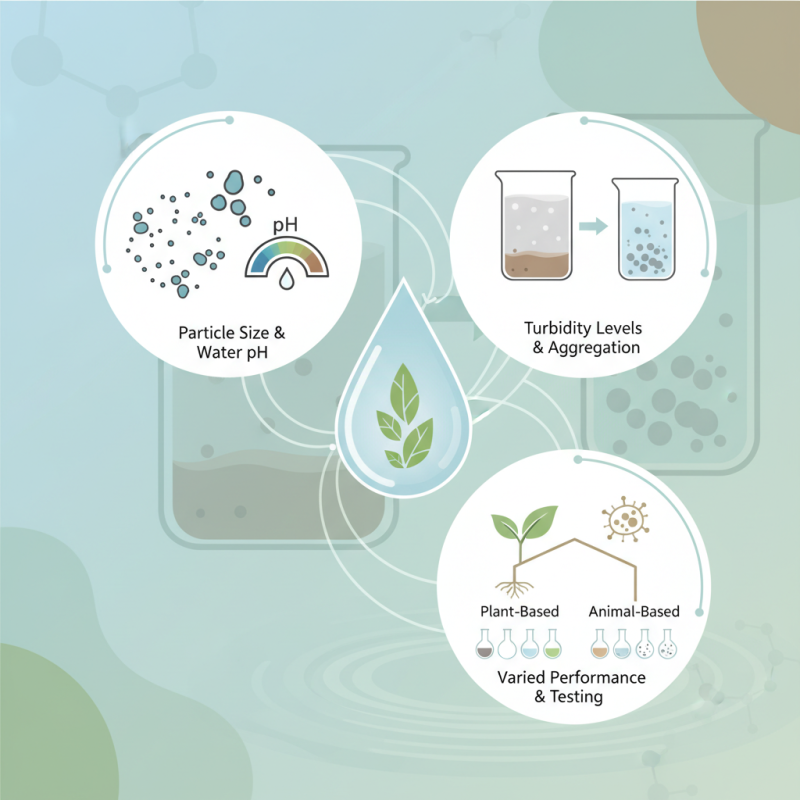
Natural Flocculants, derived from plant or animal sources, offer various advantages. These substances can help clarify water by aggregating particles. However, the selection process can be complex. Factors such as particle size, water pH, and turbidity levels must be considered.
It's clear that not all Natural Flocculants perform equally. Some may work well in specific conditions but fail in others. Therefore, testing different options is often necessary. Flocculants should enhance treatment efficiency, but their varied nature means careful evaluation is essential. In the end, the choice you make can significantly affect your water quality.
Understanding Natural Flocculants and Their Role in Water Treatment
Natural flocculants play a vital role in water treatment processes. They help aggregate suspended particles into larger clumps, which then settle out of the water. Common natural flocculants include plant materials like chitosan and alginate. These substances can be derived from renewable sources, making them environmentally friendly.
Understanding their effectiveness is crucial. Different water sources may require specific types of flocculants. The temperature and pH of the water can also influence their performance. It is sometimes difficult to know which flocculant is best suited for your situation.
Trial and error may be necessary to find the right balance. Observing how the flocculant interacts with your water can yield valuable insights.
Sometimes, the results may not be as expected. If flocculation is weak, this could be due to various factors. Maybe the dosage was incorrect, or the water chemistry might not be ideal. Reflecting on these outcomes can lead to improved methods in future applications. Each attempt provides learning opportunities, refining your approach to water treatment with natural flocculants.
Key Factors to Consider When Choosing a Natural Flocculant
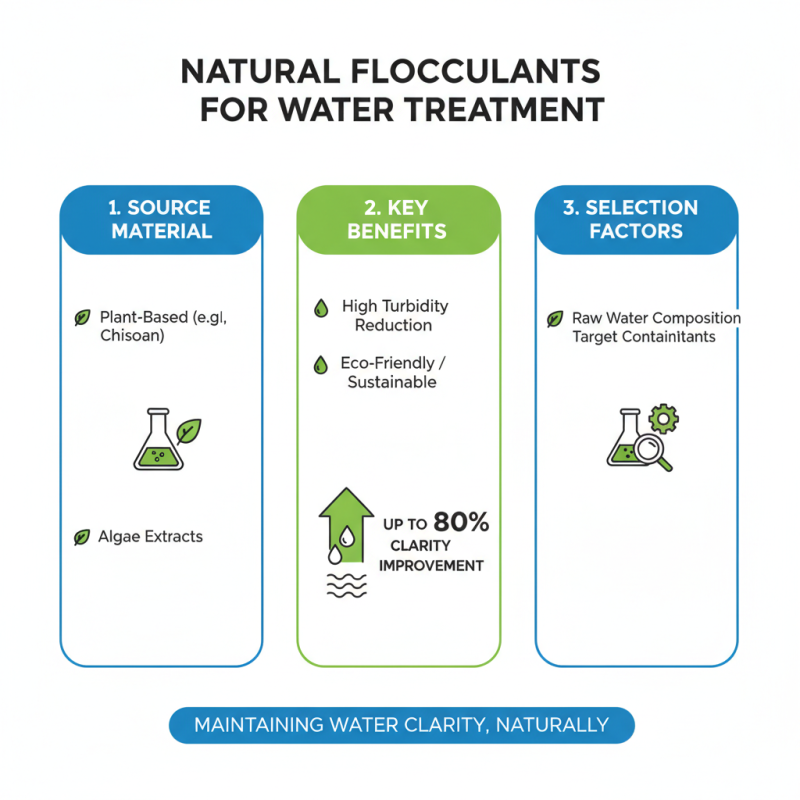
Choosing the right natural flocculant for water treatment involves several key factors. The source of the flocculant is crucial. Common options include plant-based materials such as chitosan or algae extracts. According to industry data, these natural options can effectively reduce turbidity by up to 80%, which is significant for maintaining water clarity.
The pH level of the water being treated is another important factor. Some flocculants perform better in specific pH ranges. For instance, studies show that chitosan works optimally between pH 5 and 7. Users should test their water's pH before deciding on a flocculant. If not assessed properly, the chosen flocculant may not yield the desired results.
Finally, consider the cost-effectiveness of the flocculant. While natural options may initially appear more expensive, their efficiency can reduce overall treatment costs. According to research, switching to a natural flocculant can lead to savings of up to 30% in operational costs over time. Balancing these factors is essential, but it is often overlooked. Many users choose based on initial price rather than long-term benefits.
Comparative Analysis of Common Natural Flocculants
When analyzing common natural flocculants, it’s essential to consider their efficiency and application. Various options include chitosan, guar gum, and algae-based products. A study by the Water Research Journal noted that chitosan can remove up to 90% of suspended solids in water treatments. This makes it a potent choice for many applications.
Guar gum, derived from guar beans, serves as another effective natural flocculant. It has shown significant potential in reducing turbidity. Reports indicate that guar can achieve 60% turbidity reduction in wastewater treatment processes. This is notable for industries looking to minimize chemical usage. Algae-based flocculants have been emerging in research. Some laboratory tests indicate they can match synthetic flocculants in performance, but more data is needed.
Choosing the right flocculant is influenced by specific water qualities. Factors like pH, temperature, and types of impurities matter. What works well in one scenario might not perform in another. For example, some natural flocculants may be less effective in highly acidic waters. There is still a lot to learn about optimizing usage in diverse settings. Balancing effectiveness and environmental impact requires ongoing study and reflection within the industry.
Assessing the Environmental Impact of Choosing a Natural Flocculant
Choosing the right natural flocculant is crucial for effective water treatment. It also involves assessing the environmental impact. Many natural flocculants, like plant-based options, are biodegradable. This can reduce pollution in water systems. According to a report by the United Nations, using natural flocculants can lower chemical residues significantly. This enhances water quality and promotes ecosystem health.
Tips: Always consider the source of your flocculant. Ensure it is sustainable. The extraction process can also affect the environment. Some methods may harm local ecosystems.
Evaluating costs is necessary. While natural options can be more eco-friendly, they may also pose financial challenges. A study showed that natural flocculants can be 10-30% more expensive than synthetic ones. This prompts a need for careful budgeting.
Even with the benefits, natural flocculants require more research. The effectiveness can vary depending on water composition. It's essential to test various options in real conditions. This reflection helps ensure the best choice for both water quality and environmental stewardship.
Testing and Evaluating the Effectiveness of Natural Flocculants in Practice
Natural flocculants play a crucial role in water treatment. Evaluating their effectiveness requires practical testing and methodology. Before starting, it’s important to select suitable sources. Common natural options include plant-based materials and organic substances. Each has varied properties affecting their performance.
Testing involves several steps. First, sample water is collected. Conduct experiments with different flocculants in controlled conditions. Observe how quickly particles settle. Measure turbidity levels before and after treatment. Take detailed notes during each trial. Comparing results reveals which flocculant works best.
Reflecting on these tests can highlight shortcomings. Sometimes, flocculants perform poorly under certain conditions. Factors like water temperature or pH levels impact their efficiency. It's vital to adapt and refine approaches based on findings. Continuous evaluation leads to better strategies for using natural flocculants.
Effectiveness of Natural Flocculants in Water Treatment