How to Choose PAM Polyacrylamide for Water Treatment?
Choosing Pam Polyacrylamide for water treatment requires more than comparing product prices or solution appearance. The correct grade depends on suspended solids, particle charge, pH, temperature, and treatment objectives. Municipal wastewater, mining effluent, sludge dewatering, and industrial process water may require different polymer characteristics. A product that performs well in one plant can fail in another.
Small details matter.
Charge density influences how strongly the polymer reacts with particles. Molecular weight affects floc size, settling speed, and shear resistance. Poor selection may create fragile flocs, cloudy filtrate, or excessive chemical consumption. Operators should review technical data sheets, safety information, and supplier test results before making a decision. Product labels alone are not enough.
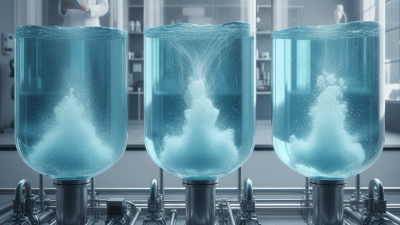
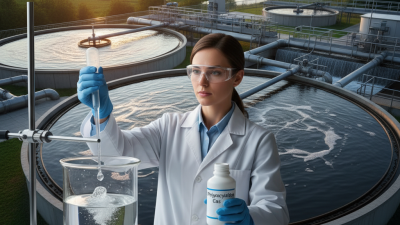
Reliable selection begins with representative water samples and controlled jar testing. Compare several Pam Polyacrylamide grades under realistic mixing conditions. Record dosage, floc formation time, settling behavior, filtrate clarity, and sludge cake moisture. These results offer stronger evidence than general claims. However, laboratory performance may not perfectly match full-scale operation. Pumps, mixers, seasonal water changes, and dosing accuracy can alter the outcome.
Experienced treatment teams also check storage stability, preparation time, residual requirements, and local discharge standards. Anionic, cationic, and nonionic formulations each serve different applications. The “best” polymer is not universal. It is the grade that delivers stable treatment with practical handling and responsible environmental control. Careful testing may seem slower, but it often prevents costly adjustments later.

What Is PAM and How Does It Work in Water Treatment?
Polyacrylamide, or PAM, is a water-soluble polymer used to separate suspended particles from water. Its long molecular chains connect small particles into larger clusters called flocs. These flocs settle faster or become easier to filter. PAM does not replace proper screening, mixing, or sedimentation. It supports those processes.
PAM can be nonionic, anionic, or cationic. The correct type depends on particle charge, water chemistry, pH, and treatment goals. In practical plant trials, operators usually compare several products through jar testing. A small dose may improve clarity, while excessive dosing can create slimy flocs and raise operating costs. More is not always better.
Good preparation also matters. Dry PAM should be dissolved gradually, with enough mixing to prevent fish-eyes, which are swollen lumps with dry centers. Gentle aging improves hydration, but harsh mixing can break the polymer chains. I have seen unclear results caused by poor preparation rather than the wrong PAM. That distinction is easy to miss.
Measure turbidity, settling speed, sludge volume, and filtrate quality during testing. Record dose and mixing conditions carefully. Water changes throughout the day, so one successful test may not represent every operating condition. A reliable selection process combines laboratory data, operator observation, and controlled on-site trials.
Which PAM Type Best Matches the Water Treatment Process?
Choosing PAM for water treatment starts with the process, not the product label. PAM means polyacrylamide, available in anionic, cationic, and nonionic forms. Each type reacts differently with suspended solids, organic matter, and sludge particles. Charge density and molecular weight also affect floc size, settling speed, and filter performance.
For sludge dewatering, cationic PAM often works well because sludge commonly contains negatively charged organic particles. Anionic PAM may suit clarification processes with mineral-rich solids, such as wastewater containing clay or metal hydroxides. Nonionic PAM can help when water chemistry is highly variable or when strong ionic interaction causes unstable flocs. These are practical tendencies, not fixed rules.
Jar testing remains essential.
Test several charge levels and concentrations using actual process water. Watch how quickly flocs form, whether they survive gentle mixing, and how clear the filtrate becomes. Small details matter. A dense floc may settle quickly but clog a belt press. A loose floc may produce clear water but poor cake dryness. In field trials, operators should also check pH, temperature, salinity, and dosing accuracy.
One test is not enough.
Seasonal changes can alter the best PAM type. I have seen a formula perform well in summer and fail after heavy rain diluted the wastewater. That result deserves review, not blame. Record the water conditions beside every test result. Optimize gradually, because excessive dosing can create slimy flocs, raise costs, and reduce treatment efficiency.
How to Evaluate PAM Molecular Weight and Charge Density?
Choosing PAM begins with two variables: molecular weight and charge density. Molecular weight influences chain length, bridging, and floc strength. Charge density controls how strongly PAM neutralizes suspended particles. High molecular weight often forms larger flocs, but excessive chain length can create slimy, slow-settling solids. Small differences matter.
The Water Environment Federation’s Design of Water Resource Recovery Facilities, 7th edition, recommends jar testing and dewatering trials rather than relying on product labels. In practice, many clarification systems test PAM near 0.1–2.0 mg/L, while sludge conditioning commonly starts around 1–10 kg per tonne of dry solids. These are working ranges, not guarantees. A 2022 review in Separation and Purification Technology also links higher charge density with faster particle neutralization, especially when colloids carry strong negative charge.
Use low, medium, and high charge grades as starting points. Then measure turbidity, settling speed, filtrate clarity, and cake dryness. A beaker test should mimic plant mixing, including rapid shear after dosing. I would also test at several pH levels. PAM performance can shift noticeably with alkalinity, salinity, and temperature. One mistake is choosing the highest molecular weight because it produces visible flocs quickly. That result may hide poor shear resistance or difficult sludge handling. Retest after changing the raw water. Real water is rarely consistent. (WEF, Design of Water Resource Recovery Facilities, 7th ed.; Separation and Purification Technology, 2022)
How to Choose PAM Polyacrylamide for Water Treatment?
Evaluating Molecular Weight and Charge Density
The chart shows representative starting ranges for cationic PAM selection in common sludge-treatment applications.
Higher molecular weight generally improves particle bridging, while higher charge density can improve adsorption onto
negatively charged sludge particles. The optimum combination depends on sludge composition, pH, solids concentration,
mixing conditions, and dewatering equipment. Always confirm the final grade and dosage through jar testing and pilot trials.
Molecular weight ranges are shown in MDa. Charge density is expressed as the approximate percentage of cationic active groups.
These are practical screening ranges rather than universal specifications.
How to Select PAM Through Jar Testing and Dosage Trials?
How to Choose PAM Polyacrylamide for Water Treatment?
Jar testing is the most practical way to select PAM for a real water stream.
Laboratory data helps, but site conditions often behave differently. Test the actual wastewater, collected in clean containers and used promptly. Record pH, temperature, turbidity, suspended solids, and conductivity before dosing.
Prepare a diluted PAM solution according to its form and dissolution requirements. Add equal water volumes to several beakers, then apply different PAM doses across a narrow range. Use rapid mixing to disperse the polymer, followed by gentle mixing to build visible flocs. Watch their size, strength, settling speed, and clarity. Keep the mixing time consistent. Small differences matter.
Run a second dosage trial around the best result. The lowest dose is not always the best choice. An overdosed sample may look cloudy, stringy, or slow to settle. Measure residual turbidity after settling, and check filterability when filtration follows clarification.
If possible, repeat the test on different days because wastewater changes. One trial may mislead.
PAM selection also depends on charge type, molecular weight, and solution viscosity. A product that performs well in one basin may fail after a pH shift or temperature change. Keep detailed records, including mixing energy and floc appearance. I sometimes find the “best” jar has fragile flocs that break during transfer. That result needs another test, not immediate approval. Dose control should be verified with plant flow, pump accuracy, and routine turbidity checks.
What Factors Affect PAM Performance, Safety, and Cost?
How to Choose PAM Polyacrylamide for Water Treatment?
Choosing PAM for water treatment requires more than comparing prices. Performance depends on water chemistry, particle size, temperature, and the polymer’s charge type. Anionic, cationic, and nonionic grades behave differently in sludge dewatering, clarification, and wastewater treatment. A jar test should measure settling speed, floc strength, filtrate clarity, and moisture content. Small dosage changes can produce surprising results.
Safety also affects product selection. Request technical data, safety documents, and information about residual monomer levels. Operators should control dust during handling and use suitable protective equipment. Storage conditions matter too. Moisture can cause clumping and poor feeding. A perfect laboratory result can mislead if the product cannot dissolve consistently in the plant’s preparation system. Field conditions are less patient.
Tips: Test several grades using real process water, not bottled samples. Compare total treatment cost, including dosage, mixing energy, sludge disposal, and equipment cleaning. Record results from different seasons. Water quality changes. Avoid selecting the cheapest polymer without checking performance stability. One overlooked factor can quietly increase operating costs. Allow enough maturation time, but do not overmix the solution. Overmixing may damage the flocs before they reach the settling tank.