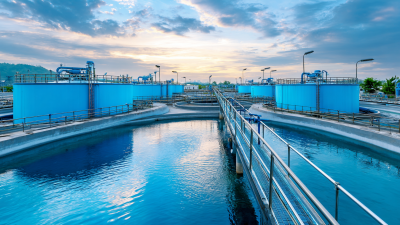
Why Choosing Anionic Flocculant is Essential for Effective Water Treatment
In the quest for effective water treatment solutions, the selection of the appropriate flocculant plays a pivotal role in determining overall efficiency and success. Among the various types of flocculants available, anionic flocculants stand out due to their unique properties and advantages, making them essential for many water treatment applications. These negatively charged flocculants interact effectively with positively charged particles in water, promoting rapid aggregation and sedimentation. This process not only enhances the clarity of water but also significantly reduces the time and resources required for treatment.
Moreover, the versatility of anionic flocculants enables their application across a wide range of industries, including municipal wastewater treatment, industrial effluent management, and even mining operations. Their efficacy in stabilizing colloidal particles and improving solid-liquid separation processes demonstrates the critical importance of incorporating anionic flocculants into water treatment protocols. As environmental regulations become increasingly stringent and the demand for cleaner water rises, understanding the benefits of choosing anionic flocculants becomes paramount for effective and sustainable water management strategies.
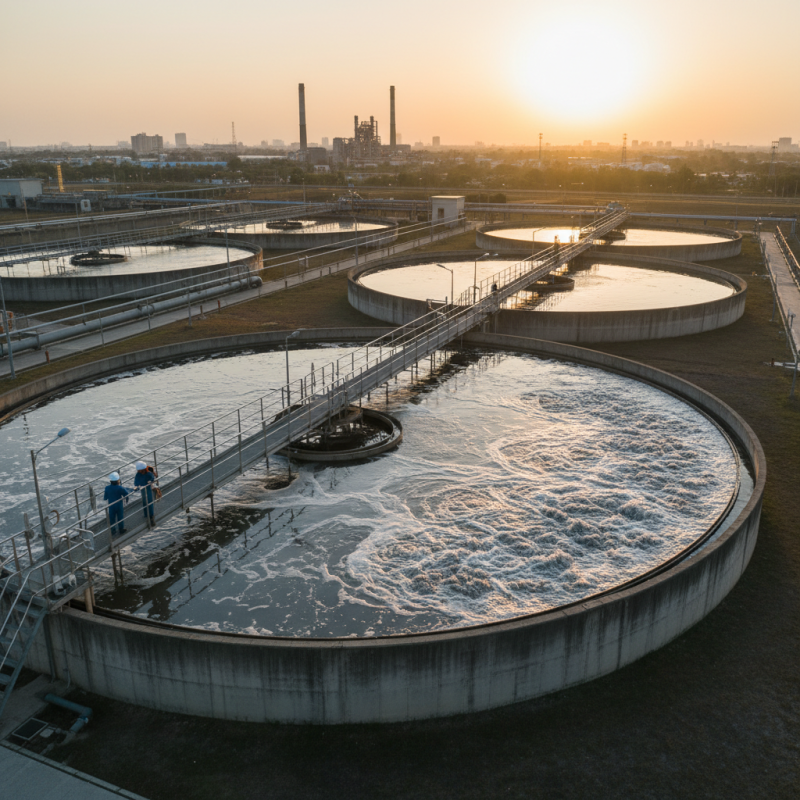
Understanding Anionic Flocculants and Their Role in Water Treatment
Anionic flocculants are a vital component in water treatment processes due to their unique properties that enhance the efficiency of particle removal. These synthetic polymers carry a negative charge, which allows them to effectively bond with positively charged particles, such as suspended solids and organic matter. By facilitating the aggregation of these particles into larger flocs, anionic flocculants promote easier sedimentation and filtration, leading to cleaner water. Their application is particularly beneficial in situations where high turbidity levels must be reduced rapidly, making them ideal for use in various industrial and municipal water treatment facilities.
Tips for choosing the right anionic flocculant include considering the specific water characteristics and the nature of the contaminants. Conducting jar tests can help identify the optimal dosage and measure the floc formation efficiency. Additionally, when deploying anionic flocculants, maintaining proper pH levels can significantly influence the performance, as the flocculant’s effectiveness can vary depending on the environmental conditions. Regular monitoring and adjustments will ensure the water treatment processes remain efficient and effective.
Moreover, understanding the environmental impact of the chosen flocculant is crucial. Opting for biodegradable and eco-friendly formulations can help minimize the negative effects on surrounding ecosystems. Always consult with water treatment professionals to align the choices with best practices and regulatory standards, ensuring not only effective water treatment but also sustainability.
The Chemistry Behind Anionic Flocculants: How They Work Effectively
Anionic flocculants play a pivotal role in
water treatment processes, primarily by leveraging their negative charge to destabilize suspended particles
in water. This destabilization occurs through a process called
"charge neutralization," where the anionic flocculant interacts
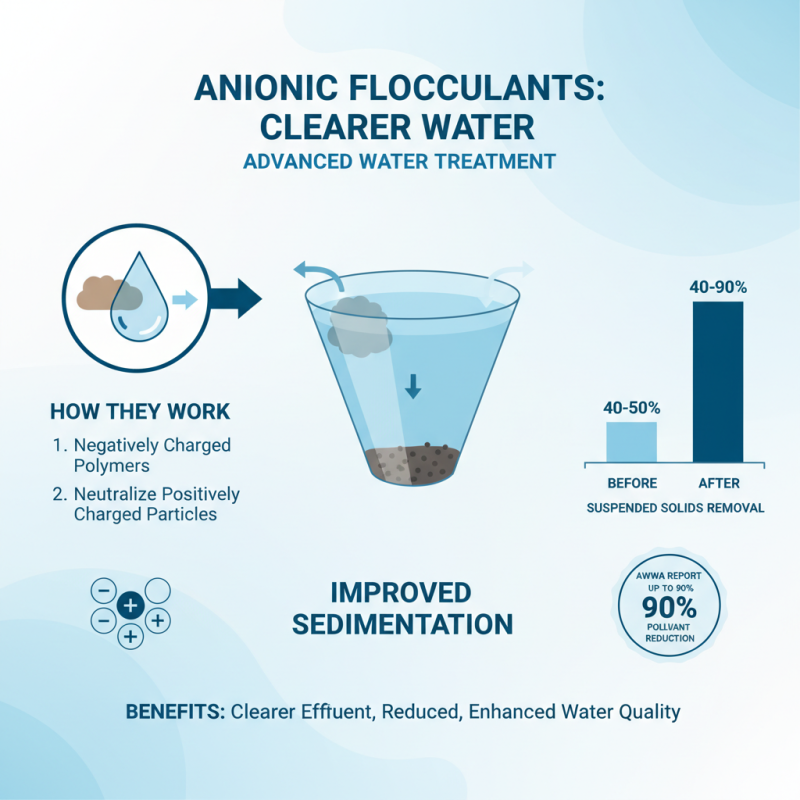
with positively charged particles, aggregation, and subsequent settling. According to a recent industry
report, using anionic flocculants can improve sedimentation rates by over 50%, significantly enhancing
the efficiency of water treatment operations.
The chemistry of anionic flocculants revolves around their molecular structure, typically featuring a
polyacrylamide backbone with carboxylate groups that contribute to their anionic nature. When introduced
into water, these flocculants increase the size of particles by bridging and forming larger aggregates,
or flocs, that can easily be removed from the solution. A study published in the Journal of Water Process Engineering
noted that the optimal dosage of anionic flocculants can vary, but proper adjustment can lead to
up to a 70% reduction in turbidity,
which is crucial for meeting regulatory compliance in wastewater discharge.
Tips: To maximize the
effectiveness of anionic flocculants in your water treatment process, ensure accurate dosing based on specific
water chemistry. Regularly monitor pH levels and suspended solids, as these parameters can significantly
influence flocculant performance. Additionally, consider conducting jar tests to determine the optimal
flocculant type and concentration for your specific application. By following these practices, you can
enhance water clarity and treatment efficiency while minimizing costs.
Applications of Anionic Flocculants in Various Water Treatment Processes
Anionic flocculants play a crucial role in various water treatment processes due to their ability to effectively destabilize and aggregate suspended solids. Widely used in municipal wastewater treatment, industrial effluent management, and even in mining operations, these agents enhance sedimentation and filtration efficiency. According to a report by the International Water Association, the application of anionic flocculants can lead to a 30-50% reduction in sludge volume, making the treatment process more cost-effective and environmentally friendly. Their negative charge allows them to attract positively charged particles, promoting rapid aggregation and facilitating easy removal of impurities from water.
In addition to municipal and industrial applications, anionic flocculants are increasingly used in agriculture for water conservation and irrigation processes. Studies indicate that utilizing these flocculants can improve water retention in soils, thereby enhancing crop yields with less water input. Furthermore, the use of anionic flocculants in stormwater treatment systems helps reduce turbidity, ensuring that runoff water meets environmental standards before being released into natural bodies of water.
Tips: When selecting an anionic flocculant, consider the specific characteristics of the water being treated, including pH levels and the type of contaminants present. Conducting a jar test can help determine the optimal dosage and flocculant type for your specific application, ensuring the best results in your water treatment efforts. Additionally, always consult up-to-date technical data and guidelines to align with environmental regulations and best practices.
Applications of Anionic Flocculants in Water Treatment
Comparative Analysis: Anionic Flocculants vs. Other Types of Flocculants
When considering the various flocculants available for water treatment,
anionic flocculants demonstrate distinct advantages
compared to their cationic and non-ionic counterparts.
Anionic flocculants are negatively charged, which allows them to effectively
neutralize positively charged particles in wastewater, resulting in enhanced aggregation and settling of suspended solids.
This leads to improved clarity and reduced turbidity in treated water. Their ability to bridge between particles also
facilitates a more robust floc formation, which is crucial in processes requiring robust removal of organic and inorganic contaminants.
In contrast, cationic flocculants, while effective in specific conditions, may exhibit complications
when used with anionic contaminants due to charge neutralization. This can hinder the flocculation process and decrease the
overall efficiency of the treatment. Non-ionic flocculants, though versatile, often rely on high molecular weights and
can be less effective in strongly charged environments. Thus, the comparative efficacy of anionic flocculants makes them an
essential choice in many water treatment scenarios, where charge interactions and specific particle sizes are critical factors influencing treatment success.
Benefits of Using Anionic Flocculants for Enhanced Water Quality Management
Anionic flocculants play a crucial role in enhancing water quality management by improving the efficiency of sedimentation processes. These water-soluble polymers are negatively charged, which allows them to effectively neutralize the positive charge of suspended particles in water. According to a report by the American Water Works Association, the utilization of anionic flocculants in municipal wastewater treatment can increase the removal rates of suspended solids by up to 90%, leading to clearer effluents and an overall reduction in pollutants released into natural water bodies.
The benefits of incorporating anionic flocculants in water treatment processes extend beyond just improved clarity. Studies have shown that these flocculants can significantly reduce the amount of coagulants needed, which not only decreases chemical costs but also minimizes the generation of chemical sludge. The Water Environment Federation reported that the use of anionic flocculants in industrial wastewater treatment facilities resulted in a 30% decrease in chemical consumption and a 25% reduction in the volume of generated waste. This enhances operational efficiency and promotes sustainable practices in water management, making anionic flocculants an invaluable asset for effective water treatment strategies.