2026 Best Color Fixing Agent Options for Your Needs?
In the textile and dyeing industry, the demand for effective Color Fixing Agents is increasing. According to a recent report by Research and Markets, the global color fixing agent market is projected to reach USD 1.5 billion by 2026, growing at a CAGR of 5.2%. As industries seek to enhance color durability and stability, the right color fixing agent becomes crucial.
Dr. Alice Chen, a leading expert in textile chemistry, emphasizes the importance of these agents. She states, "A quality Color Fixing Agent can dramatically improve color retention, reducing waste and enhancing product longevity." This insight sheds light on why manufacturers must choose wisely when selecting their options.
Not all Color Fixing Agents deliver the same results. Some may not meet industry standards, leading to poor color fastness. This can result in financial losses for manufacturers. It’s essential to evaluate the available options critically. Understanding the specific needs of your application will guide you toward the best choice. The ongoing advancements in this area also urge a reflective approach to selection.
Understanding Color Fixing Agents: Definition and Importance
Color fixing agents play a crucial role in various industries, particularly in textiles and cosmetics. These substances help to stabilize colors, ensuring that they remain vibrant and do not fade over time. According to industry reports, nearly 30% of color loss is attributed to improper fixation. This highlights the importance of selecting the right agent for your specific needs.
When choosing a color fixing agent, consider the material you are working with. For textiles, reactive dyes often require specific fixing agents to maintain hue. In cosmetics, the right fixing agent ensures that pigments adhere to the skin without fading. Research shows that products with effective fixing agents see a 25% longer wear time on average.
Tips: Always test a small sample first. Assess how the fixing agent interacts with your material. This could prevent larger issues later. Understanding pH levels can also affect the fixing process. Different agents work better within specific pH ranges. Consider this carefully in your selection process.
Types of Color Fixing Agents: Natural vs. Synthetic Options
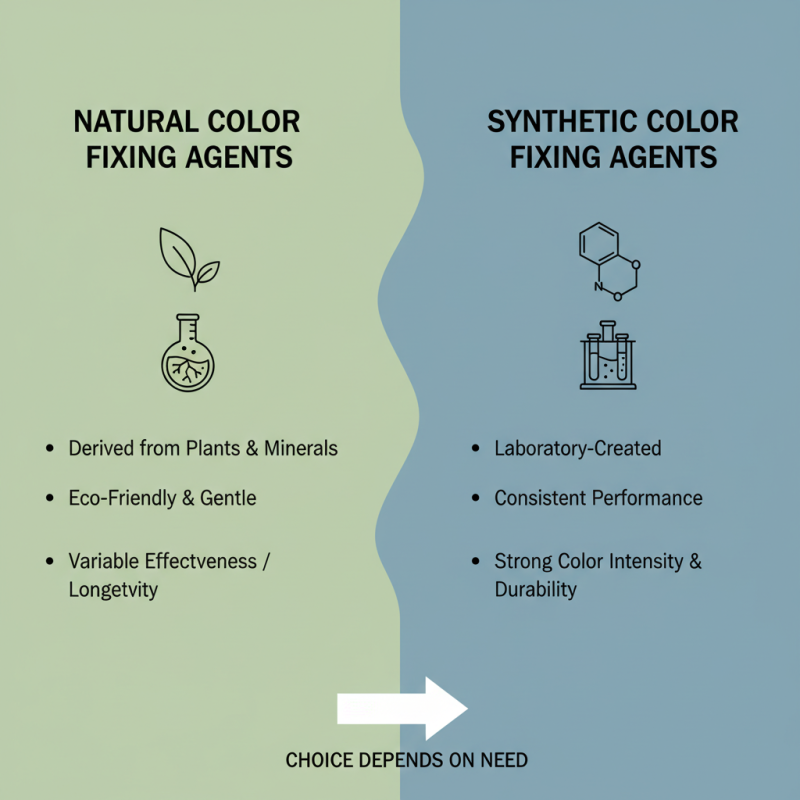
Color fixing agents are pivotal in various industries, especially textiles and cosmetics. When choosing between natural and synthetic options, it's essential to consider their unique characteristics. Natural color fixing agents, derived from plants and minerals, often appeal due to their eco-friendliness. They tend to be gentle on skin and fabric. However, their effectiveness can vary greatly. Sometimes, they may not provide the desired color intensity or longevity.
Synthetic options are engineered for specific outcomes. They offer consistency and durability, which can be a significant advantage. However, these agents may introduce potential irritants. Users should carefully read labels for ingredient transparency. The choice often boils down to personal values versus practical needs. A strong natural dye may fall short in performance, while synthetic agents can feel harsh. This contrast is crucial for consumers looking to balance sustainability and efficacy.
Factors to Consider When Choosing a Color Fixing Agent
When selecting a color fixing agent, several factors deserve attention. First, consider the type of material. Different fabrics respond uniquely to color agents. Cotton, for instance, requires distinct treatments compared to synthetic fibers. Testing on small samples can reveal how well a solution works. This can save time and resources in the long run.
Next, think about environmental impact. Many agents contain chemicals that can harm ecosystems. Look for biodegradable options. These are often gentle yet effective. Check for certifications that indicate a product is eco-friendly.
Finally, usability is key. Some agents are straightforward, while others may require precise mixing. Pay attention to application methods. A complicated process might lead to mistakes. Also, note that there isn’t a one-size-fits-all solution. Each project may require different approaches. Experimenting and adjusting can lead to better results.
Top 2026 Color Fixing Agents: Features and Benefits
Finding the right color fixing agent can be challenging. Many options claim to provide excellent results. However, not all agents work effectively for every need. Each agent has unique features that make it suitable for specific applications. Understanding these differences is essential for avoiding common pitfalls.
Some color fixing agents offer quick drying times. They are practical for large projects where speed is crucial. Yet, this rapid application may lead to uneven results if not handled carefully. Other agents prioritize durability over drying speed. This can be an advantage for long-lasting colors but may require more application time.
When evaluating options, consider what you value most. Durability, drying time, and ease of use will influence your choice. Some users may overlook surface preparation, impacting color adherence. Experimentation can yield surprising results. Trying different agents on sample fabrics might reveal unexpected preferences. Embrace the learning process; each experience can guide your future selections.
2026 Best Color Fixing Agent Options for Your Needs
Application Methods for Effective Use of Color Fixing Agents
Color fixing agents play a crucial role in textile and dye industries. They ensure that dyes remain stable and do not wash out or fade over time. Various application methods can enhance their effectiveness. For instance, the optimal pH level during application can significantly impact their bonding ability. According to a recent industry report, maintaining a pH of around 5.0 can increase color retention by up to 30%.
Another effective method involves the use of heat during application. By applying color fixing agents at elevated temperatures, dye molecules can bond more firmly to fabric fibers. However, users must be cautious. Excessive heat can also degrade certain fabrics or dyes, leading to unsatisfactory results. Additionally, incorporating pre-treatment steps can further improve fixing efficiency. Applying a fixative solution before dyeing can enhance the overall color intensity.
Yet, there are challenges to consider. Not all fabrics respond the same way to color fixing agents. Some may require specific agents or even a combination of methods for optimal results. Observations from recent studies highlight that synthetic fibers often behave differently than natural ones. Users might find inconsistent results if they do not tailor their approach to the fabric type. Therefore, experimentation is key to finding the best solution for each unique project.
2026 Best Color Fixing Agent Options for Your Needs - Application Methods for Effective Use of Color Fixing Agents
| Color Fixing Agent |
Application Method |
Recommended Concentration (%) |
Effectiveness Rating (1-5) |
pH Stability |
| Agent A |
Spray Application |
2% |
4 |
4-9 |
| Agent B |
Dip Method |
3% |
5 |
3-8 |
| Agent C |
Paint Spray |
1.5% |
3 |
5-10 |
| Agent D |
Brush On |
2.5% |
4 |
6-10 |
| Agent E |
Roller Application |
2% |
4 |
4-8 |