2026 Top Anionic Flocculants What You Need to Know
As industries evolve, understanding the role of Anionic Flocculants becomes crucial. Dr. Emily Thompson, a leading expert in water treatment technologies, states, "Anionic Flocculants are vital for efficient wastewater management." This highlights their significance in various applications, including mining, wastewater treatment, and paper production.
Anionic Flocculants work by destabilizing suspended particles, encouraging sedimentation. They are particularly effective in high pH environments. Industries rely heavily on these flocculants to optimize their processes. Knowledge of different formulations can impact performance and cost efficiency.
However, not all Anionic Flocculants are created equal. Choosing the wrong type can lead to inefficiencies and increased operational costs. It's essential to stay informed about advancements in flocculant technology. This awareness fosters better decision-making in selecting the right flocculant for specific applications. As Dr. Thompson emphasizes, continuous learning is key in this evolving field.

Overview of Anionic Flocculants and Their Applications
Anionic flocculants are crucial in various industries, particularly in water treatment and mineral processing. These water-soluble polymers work by neutralizing charges in suspended particles, promoting coagulation and sedimentation. Studies indicate that anionic flocculants can reduce turbidity by over 90% in wastewater treatment plants. This efficiency is essential, as effective waste management directly impacts environmental compliance.
In mining operations, anionic flocculants facilitate the separation of valuable minerals from ore. According to industry reports, the use of flocculants can improve yield rates by 20% or more. Within the paper and pulp industry, these agents enhance fiber recovery, producing cleaner effluent. However, reliance on chemical flocculants may pose risks, including potential toxicity to aquatic life.
As regulations tighten, the pursuit of biodegradable alternatives intensifies. Current data reveals that about 30% of flocculants are moving towards sustainable formulations. This shift highlights a need for continuous innovation while addressing environmental concerns. Balancing efficiency with ecological impact remains a complex challenge for manufacturers. The path forward requires greater collaboration across sectors to enhance both effectiveness and sustainability.
2026 Top Anionic Flocculants Overview
| Flocculant Type |
Molecular Weight (MW) |
Charge Density |
Applications |
Dosage Range (ppm) |
| Polyacrylate |
5-20 million |
High |
Wastewater Treatment, Mining |
10-100 |
| Starch-based |
0.5-5 million |
Medium |
Paper and Pulp Industry |
20-200 |
| Cellulose Derivative |
3-15 million |
Low to Medium |
Agricultural Runoff Treatment |
15-150 |
| Modified Polyacrylamide |
10-25 million |
Very High |
Oil and Gas Extraction |
5-50 |
| Anionic Copolymer |
1-10 million |
Medium |
Beverage Filtration |
25-200 |
Key Characteristics of Top Anionic Flocculants in 2026
Anionic flocculants are crucial in various industries, including water treatment and paper manufacturing. By 2026, the top anionic flocculants showcase unique characteristics that enhance their performance. These flocculants have high charge densities, which promote efficient aggregation of fine particles. Their composition often includes polyacrylamide, offering effective solutions for suspended solids removal.
One key characteristic of these flocculants is their ability to function in diverse pH ranges. This adaptability allows them to excel in different operational environments. Furthermore, the molecular weight of these flocculants varies significantly, influencing their effectiveness in specific applications. For instance, high molecular weight flocculants can provide superior bridging, while lower molecular weights enhance dispersion.
Despite their advantages, it's essential to consider potential limitations. The sensitivity to ionic strength of the solution can impact performance. Additionally, excessive usage may lead to over-flocculation, which reduces water clarity. Undertaking continuous assessments of flocculant performance is vital. This awareness ensures optimal conditions are maintained for successful applications.
Industries Benefiting from Anionic Flocculants
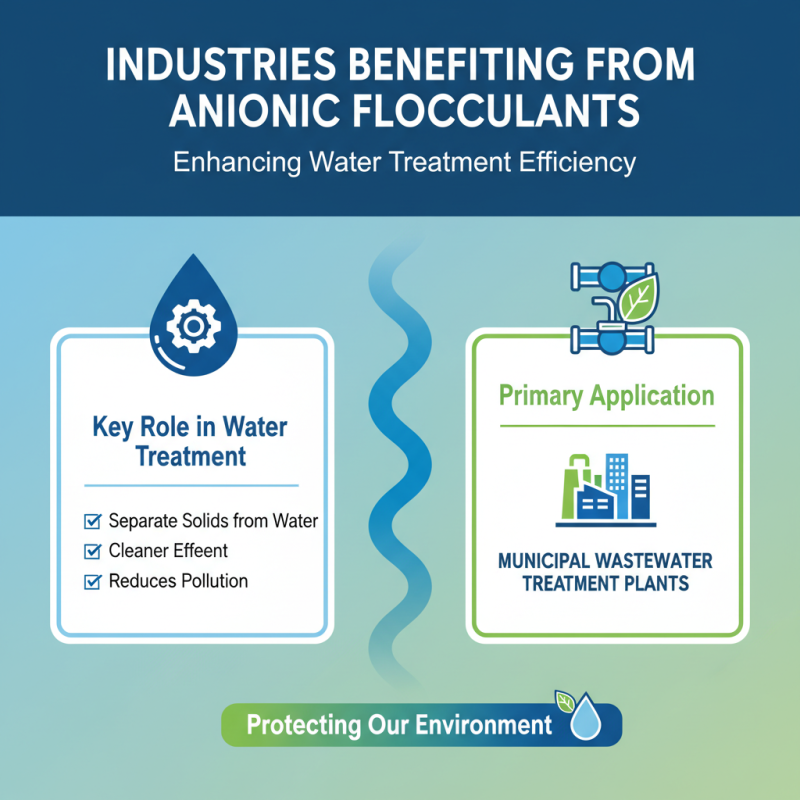
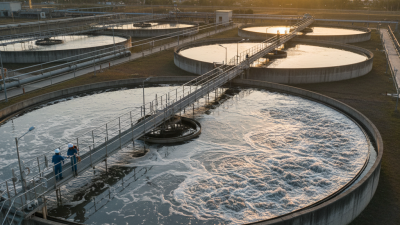
Anionic flocculants play a vital role in various industries, enhancing the efficiency of water treatment. These flocculants are essential in municipal wastewater treatment plants. They help separate solid waste from water, making the effluent cleaner. This process protects the environment by reducing pollution levels before water is released back into natural bodies.
Mining is another sector that benefits significantly from anionic flocculants. When separating valuable minerals from ore, these agents improve recovery rates. This process also reduces the amount of waste generated, which is crucial for sustainable mining practices. The efficiency of mineral processing often hinges on the proper use of flocculants in slurry management.
In the paper and pulp industry, anionic flocculants aid in the clarification of pulp. They help remove unwanted particles, leading to higher quality products. However, the effectiveness can vary based on the specific conditions of the operation. It's essential for industry professionals to continually assess and adapt their flocculant use. This reflection ensures optimal performance and resource use.
Comparison of Leading Brands of Anionic Flocculants
When choosing anionic flocculants, a comparison of leading brands reveals significant differences. Anionic flocculants are essential for industries requiring solid-liquid separation. Their efficiency varies according to properties like molecular weight, charge density, and viscosity. Recent industry reports indicate that the most effective flocculants can enhance sedimentation rates by up to 70%.
In terms of performance, some anionic flocculants excel in wastewater treatment, while others shine in mineral processing. The choice of product often depends on specific applications and working conditions. For example, certain formulations may work better in high salinity environments, while others are more suited for low-pH conditions. It’s crucial to analyze the operational parameters before making a decision.
Tip: Always conduct a small-scale trial to assess the flocculant's performance in your specific situation. This step can prevent costly mistakes.
Another point to consider is the impact of environmental factors. Some anionic flocculants may perform exceptionally well under laboratory conditions but fall short in real-world scenarios. Keeping track of these variables can lead to more informed choices.
Tip: Collaborate with industry experts to gain insights into the challenges of flocculant deployment. Their experience can guide you in selecting the most suitable product for your needs.
Future Trends in Anionic Flocculant Technology
Anionic flocculants are gaining attention for their role in water treatment processes. Future trends in this technology highlight notable advancements. More industries are adopting eco-friendly formulations. Researchers are focusing on biodegradable options to reduce environmental impact. This shift is crucial as sustainability becomes a priority.
Moreover, innovation in molecular design is on the rise. Customization of flocculants is improving efficiency in various applications. Enhanced performance characteristics are facilitating better solid-liquid separation. However, challenges remain. Manufacturers face difficulties in scaling up production. This inconsistency can hinder widespread use.
Furthermore, real-world application feedback is vital. Companies must gather data to refine these products. There is a need for ongoing collaboration between researchers and industry leaders. Mastering this relationship can drive the necessary innovations. Future developments must prioritize reliability and performance. The road ahead is promising yet demands vigilance.